
Skip to content
Start of page content below the header
Blog Post
27 April 2026

Harvest under fire: Fertilizer shortages and the geopolitics of food in the Middle East

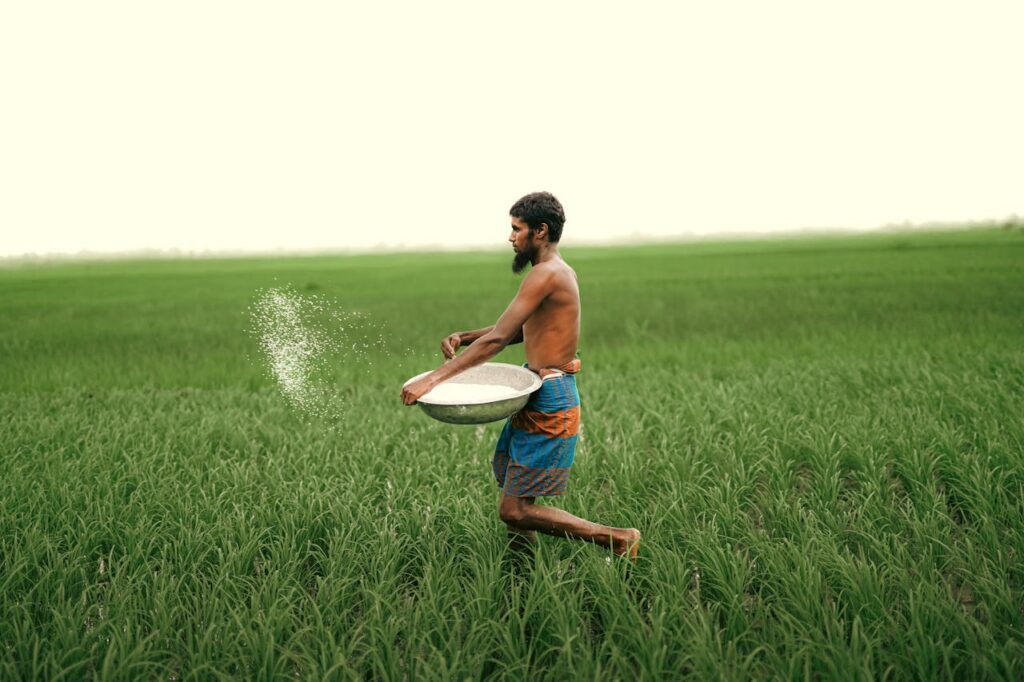
Photo by Mijanur Rahman Niloy / Pexels

The shock and its transmission to fertilizer markets

The outbreak of military conflict involving Iran, Israel, and the US in late February 2026 demonstrates how interconnected global energy, trade, and agriculture systems can amplify the effects of regional conflicts. While the war continues to evolve, its immediate consequences, including damage to infrastructure, restrictions on maritime navigation in the Persian Gulf, tighter sanctions, and heightened geopolitical uncertainty, have disrupted fertilizer supply chains.
Fertilizer production is energy-intensive, with natural gas accounting for up to 70–80 percent of production costs for nitrogen-based fertilizers. The Persian Gulf is both a primary producer of these inputs and a critical transit hub. The Gulf Cooperation Council countries (GCC) and Iran together supply one third of global urea exports, and nearly half of traded sulfur . The closure of the Strait of Hormuz, a critical maritime chokepoint for global crude oil, liquefied natural gas (LNG), and fertilizers, has simultaneously disrupted production, feedstock supply, and export logistics, creating a compounding supply shock that propagated through agricultural systems.
Consequently, this regional conflict has quickly escalated into a global fertilizer supply crisis, with most immediate and acute consequences felt in agriculture-dependent economies, where access to energy, inputs, and trade routes is critical for food production and stability.

Why the MENA region is vulnerable to fertilizer supply shocks

The Middle Eastern and North African (MENA) countries face inherent agricultural constraints that make them exceptionally vulnerable to global supply chain shocks with limited buffers against external disruptions. More than 80% of the region is arid or semi-arid, characterized by nutrient-poor, saline soils and severe water scarcity, forcing agricultural systems to rely heavily on energy-intensive irrigation and synthetic fertilizers (Figure 1). Dependence on nitrogen fertilizers is particularly acute in the region, as they must be applied every growing season to sustain yields. This creates a tight dependency between fertilizer availability and immediate production outcomes, meaning supply disruptions can reduce crop yields within a single season.
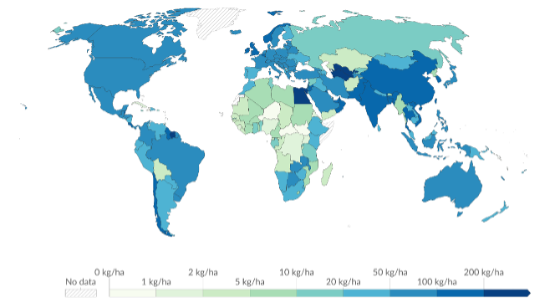
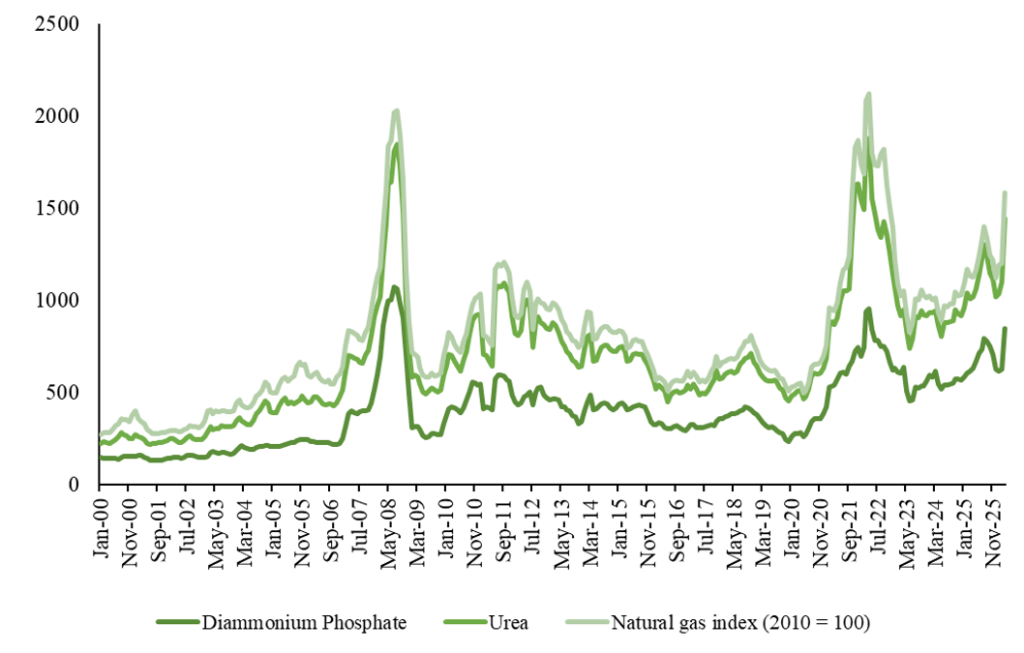
Figure 1. Nitrogen fertilizer use per hectare of cropland, 2023 (Kilogram of total nutrient per hectare of cropland). Source: OurWorldData/fertilizers

A structural paradox further intensifies this vulnerability; while MENA region is a net importer of food—accounting for roughly 40–60% of caloric consumption in many countries, it is also a major exporter of nitrogen fertilizer; creating a distinct structural vulnerability. Countries such as Iran, Qatar, and Saudi Arabia leverage abundant natural gas reserves to manufacture urea and ammonia, supplying approximately 36% of global urea exports between 2023 and 2025. However, as shipping routes were disrupted and infrastructure damaged, production slowed due to LNG shortages. Urea prices in the region surged by 19–40% within weeks, from USD 465–500 per ton pre-war to USD 585–700 mid-March, with similar disruptions in phosphate and sulfur markets (Figure 2).

Broader economic and institutional factors further amplify systemic risk. Concentrated supply chains, limited fiscal space, currency volatility, and heavy government subsidies—often designed to support high-input, resource-intensive agriculture—reduce governments’ ability to respond effectively. As a result, shocks, whether from chokepoint disruptions, energy price surges, or export restrictions, translate quickly into reduced planting, yield losses estimated at 15–30%, and cascading impacts on food prices, rural livelihoods, and food security.

While the 2022 Russia-Ukraine fertilizer crisis exposed similar vulnerabilities, the current crisis poses an even  more severe to MENA food systems. First, the geographic proximity places MENA countries within the conflict zone, with overland alternatives through Jordan, Syria, Iraq, or Saudi Arabia are themselves compromised by insecurity and infrastructure limitations. Second, the present conflict simultaneously disrupts multiple major producers across the Gulf, rather than a limited number of exporters, amplifying global supply shortages.  Third, the region’s reliance on Gulf-sourced fertilizers is not easily substituted. Although Russia or China could provide alternative suppliers, transportation costs, diplomatic relationships, and payment mechanisms limit access.

Figure 2. Monthly natural gas price index (average price with weights based on 5-year average consumption volumes) and prices of selected nitrogenous fertilizers (US$ per metric tonne), January 2000 to February 2026. Source: Author plotted using data from UN Trade and Development (UNCTAD).

Timing of this war is catastrophic, while the disruption coincides with the spring planting season. Since fertilizers must be applied at or before planting, current shortages risk immediate and irreversible production losses. The global fertilizer market was already structurally tight before the conflict: European fertilizer production declined after the loss of cheap Russian gas, and China had progressively restricted fertilizer exports. As a result, the current war has triggered what the FAO described as a “systematic shock” to global food systems”. Energy and fertilizer shock compounds the impact, as farmers face rising fertilizer costs alongside escalating fuel prices affecting irrigation, tillage, transport, and storage. This double burden reduces the affordability of the entire production cycle, not merely one input. Unlike the 2022 crisis, which mainly disrupted potash and some nitrogen, the current crisis affects nitrogen, phosphate, sulfur, and ammonia. At the same time, relatively low grain prices in 2026, due to a global glut, limit farmers’ ability to absorb these shocks.

Food system consequences

The implications for farmers and food security are severe. Smallholder and medium-scale farmers face immediate cost spikes, with fertilizer accounting for 30-50% of production costs for staple crops. Higher input costs combined with expected lower yields create a profitability squeeze that threatens farm viability. Unlike large producers, smallholders lack the capital to absorb shocks or stockpile inputs when prices are lower.
Evidence from 2022 crisis suggests that smallholder farmers may reduce fertilizer use by 15–30%, leading to yield reductions of 10–20% for cereals. This raises risks of debt accumulation, bankruptcies, or land abandonment, particularly in marginal areas.
Behavioral responses from farmers, traders, and governments are further amplifying the crisis. Farmers and traders, anticipating further price increases, have stockpiled fertilizer, creating artificial scarcity. In Turkey, farmer demand doubled soon after the conflict began, while distributors slowed sales in expectation of higher prices. This precautionary hoarding creates artificial scarcity, driving prices higher up and reinforcing further hoarding. Governments have compounded the problem with protectionist measures, e.g., Algeria cut fertilizer production to 50% of capacity to prioritize gas exports, and China expanded urea export restrictions while Russia suspended ammonium nitrate export licenses. Gulf producers declaring force majeure have effectively banned exports by suspending contracts, a legally defensible but counterproductive response that exacerbates shortages in importing countries. These beggar-thy-neighbor policies, while individually rational, collectively deepen the global shortage and accelerate price spirals, a as seen in the 2008 and 2022 crises.
These consequences extend far beyond fertilizer markets into food, as domestic production shortfalls, widening import gaps amid already elevated global prices. The transmission from fertilizer prices to food prices operates with a lag of approximately six to nine months, meaning that the full impact will materialize in late 2026 and early 2027. The World Bank show food prices climbing around 3% in a single month, with expectations of continued increases. The MENA region was already insecure prior the crisis, with large populations affected by conflict and displacement The fertilizer-driven food price inflation will disproportionately affect low-income households, which spend a larger share of their budgets on food. With national strategic grain reserves in several MENA countries, the World Food Programme projects a 14% increase in food insecurity across the region.
The risk of political instability is significant. Past crises—including the 2007–2008 food riots and the 2010–2011 Arab uprisings—demonstrate how food price shocks can trigger unrest. More recently, Sri Lanka’s 2022 fertilizer ban offers a clear example of how agricultural shocks can contributed to government collapse. Today’s context is even more fragile: around 40% of the Arab MENA population (186.5 million of people) faces moderate or severe food insecurity, including 73.7 million people in severe food insecurity, and fiscal capacity hollowed out by pandemic debt, and humanitarian funding declining. Together, these conditions create a highly combustible environment in which fertilizer and food price shocks can act as a catalyst for widespread social unrest and political destabilization.

What should we learn: Policy recommendations for building resilience?

This crisis underscores the fragility of geographically concentrated, just-in-time supply chains in a volatile geopolitical environment. It highlights the need for diversified sourcing as countries should accelerate trade agreements with alternative producers and invest in strategic stockpiles. Mitigation strategies must be multi-layered: governments can deploy targeted subsidies or price caps for smallholders during acute spikes, while promoting precision agriculture technologies without yield loss. Long-term preparation involves investment into resilient crop varieties, enhanced soil health to reduce synthetic dependency, and regional cooperation on alternative transport routes. International bodies such as FAO and IFPRI should advocate for global fertilizer resilience funds and early-warning systems linked to chokepoint monitoring. Ultimately, building adaptive capacity through sustainable intensification and diversified energy feedstocks will be more effective than reactive aid, ensuring MENA agriculture withstand future shocks without compromising food security.

Written by Assem Abu Hatab, Associate Professor at the Department of Economics in the Swedish University of Agricultural Sciences (SLU) and Senior Development Economist at the Nordic Africa Institute.