Food plays a major role in our identity. It carries memories and identity. For the Sámi traditional food systems are inseparable from livelihoods and culture. Reindeer herding, fishing, hunting, gathering, and small-scale farming have sustained communities for centuries. Yet today, this food system faces profound pressures, from diverse forms of resource extraction and industrial food systems driven by neoliberal economics, policy frameworks including carnivore protection, and climate change, all of which threaten both the nutritional and cultural integrity of Sámi diets.
In the International Year of Rangelands and Pastoralists (IYRP), Ildikó Asztalos Morell, Associate Professor of Sociology, Swedish University of Agricultural Sciences (SLU), Department of Urban and Rural Development, in collaboration with partners at Ranchi University in India and Umeå University highlights not only the challenges confronting Sámi Indigenous food systems, but also brings this traditional food to revive ageing populations.
Nutritional value of reindeer meat and by-products
A reflection from Asztalos Morell’s research project suggests the importance of familiar foods for both physical and mental well-being among Sami elders. A study on the Sami ageing population and their food preferences highlights the significance of food as identity, a topic often overlooked in ageing studies.
In Sweden, older adults in elderly care generally have access to sufficient food in line with national nutritional guidelines. Despite this, undernutrition remains a persistent problem, food waste is widespread, and refusal to eat is common, particularly among minority groups. Nutritious and enjoyable food is a key determinant of healthy and active ageing.
“Many Sami elders say they simply do not recognize the food they are served as food that belongs to them.”
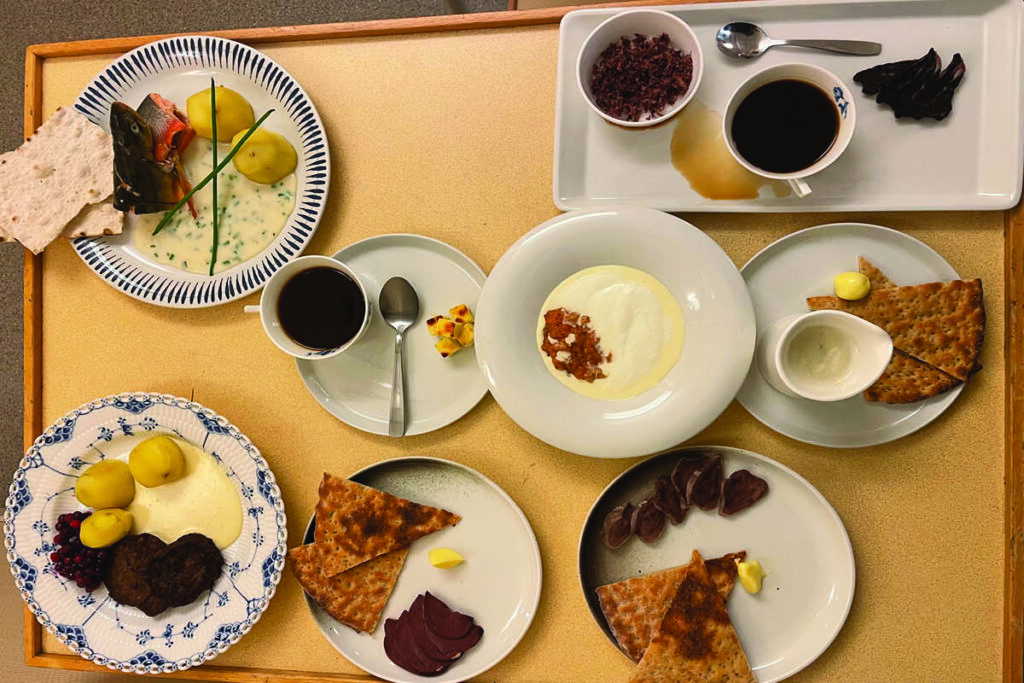
Using the method of Sami food inspirer Ann Sparrock, Asztalos Morell’s research group emphasize the importance of basing food provision on local food traditions. For the Sami, traditional food is closely linked to the eight seasons of reindeer herding and to a holistic use of the whole animal. Through interviews and workshops, older Sámi adults identified eight preferred meals, many using entrails, such as blood, liver, heart, fet, tongue, which arediscarded in commercial slaughterhouses, where Sámi have to perform slaughter for sales.
Reindeer meat is not just culturally significant; it is nutritionally exceptional. Research by Lena Maria Nilsson and others has shown that reindeer meat has higher micronutrient density than industrial meats such as pork or beef, meaning smaller amounts can provide the same nutritional benefit. Food prepared holistically from reindeer offers more than nutrients. It contributes to sustaining their identity, inspires memories and appetite, and enhances well-being.
Particularly, Traditional Sámi foods are nutritionally superior to farmed or imported foods, providing the minerals and proteins suited to Arctic conditions. The decline in traditional food consumption in the area reduces access to nutritionally rich foods and weakens cultural identity, especially for elderly Sámi, for whom reindeer herding and traditional foods are central to cultural belonging.