Skip to content
Start of page content below the header
News Story
2 December 2025

Investing in the future: Building partnerships and financing for healthier school meals

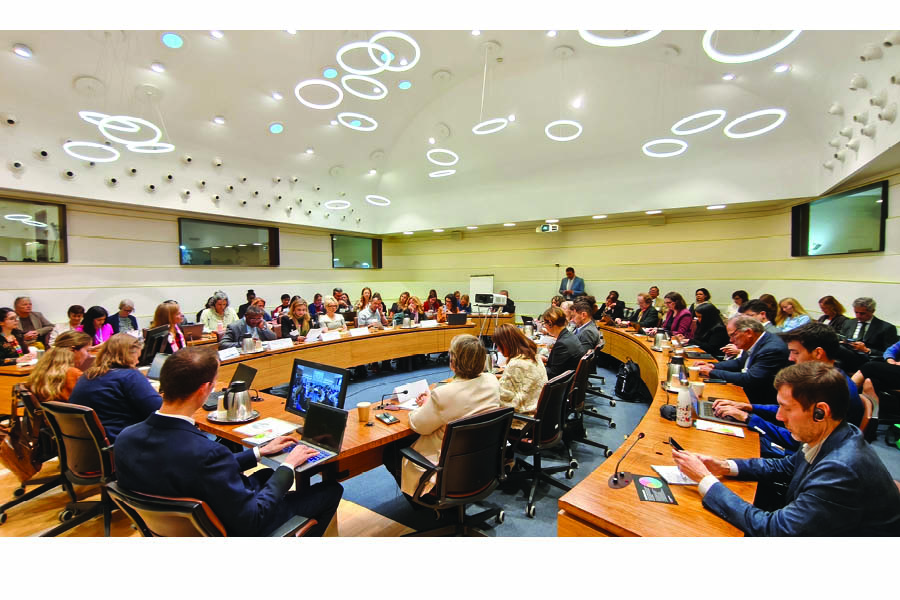
At CFS 53, the side event “Investing in the future: Building partnerships and strengthening financing for healthier School Meals Programmes”. Photo by FAO.

The global agenda for food security and nutrition increasingly recognises school meal programmes as essential to achieving the Sustainable Development Goals (SDGs), particularly SDG 2. The discussions during the Swedish World Food Day celebration in 2024 echoed the global dialogue taking place at the Committee on World Food Security (CFS) side event, Investing in the future: Building partnerships and strengthening financing for healthier School Meals Programmes”. Both platforms highlighted the need for multi-sector collaboration by uniting governments, development partners, and the private sector to ensure sustainable and inclusive school meal systems. Specifically, the CFS’s side event explored practical approaches to the sustainable implementation of these programmes, with a focus on long-term financing, robust partnerships, and scalable country programmes. 


From political will to practical action 

The event brought together representatives from FAO, Brazil, Kenya, Sweden and global alliances – each highlighting how political commitment is turning into practical solutions. As Maximo Torero, FAO Chief Economist, shared, global investments in school meals reached nearly USD 50 billion in 2022. Today, around 418 million children benefit from these programmes, up from 380 million just a few years ago, demonstrating both the scale and momentum. 

A School Meals Coalition (SMC) was launched in 2021. It now unites 91 member states and over 140 partners, underscoring school meals as a strategic investment both in education, health, and economic resilience, even during a crisis. 
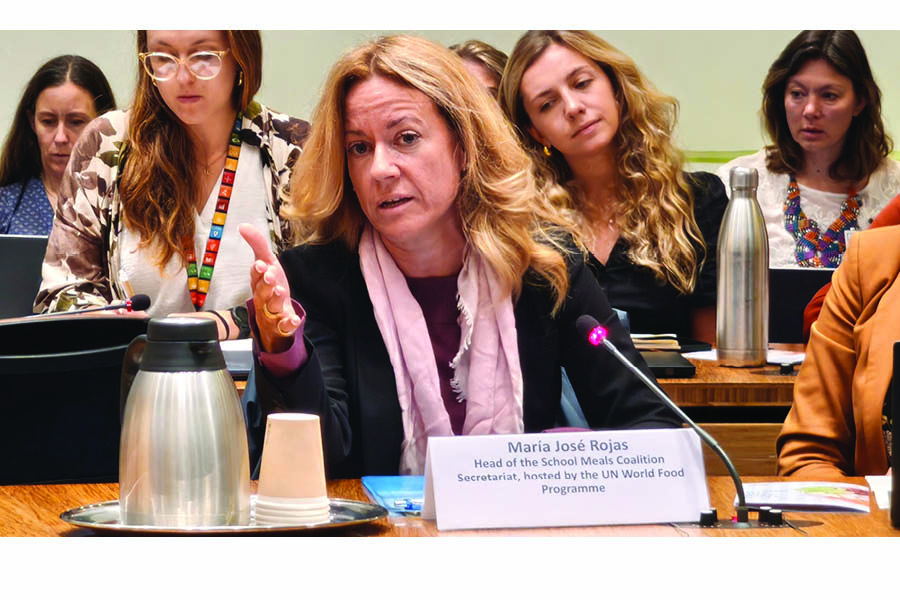
Maria Jose Rojas, Head of Partnership and Advocacy, School Based Programmes, WFP,. Lead of the School Meals Coalition Secretariat. Photo by FAO.

Closing the financing gap 

Despite strong political commitment, sustainable financing remains a major challenge. While 84% of countries now allocate national budgets for school meals, only about one-third report that resources are sufficient to ensure adequate quality and coverage of those school meals. The event emphasised the need for innovative, multi-sectoral financial mechanisms that combine domestic resources, international aid, and private-sector contributions. 


Several new initiatives are addressing this gap. The Global Alliance Against Hunger and Poverty (GAHP) aims to double meal coverage in low- and lower-middle-income countries by 2030, through pilot programmes in Benin and Kenya linking school feeding to local farming and water-harvesting systems. Similarly, the Sustainable Financing Initiative (SFI), introduced by the World Food Programme (WFP), is identifying country-based financial mechanisms, such as leveraging tax systems and debt swaps, to move from short-term donor reliance to lasting, country-owned solutions.

Learning from national success stories 

Brazil and Kenya both offered powerful examples of what long-term political commitment can achieve. 

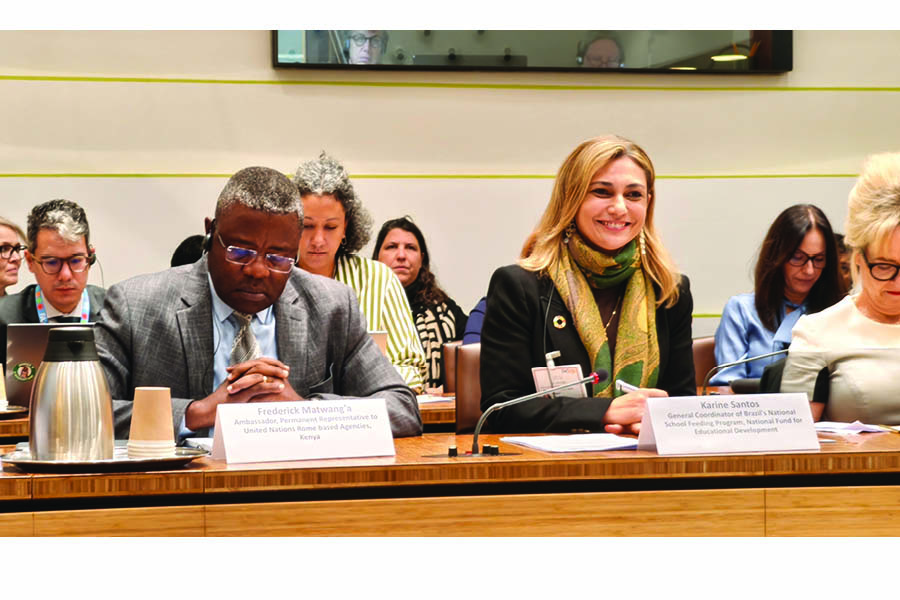
Brazil’s National School Feeding Program (PNAE), which celebrates its 70th anniversary this year, is one of the world’s most comprehensive models. With an annual budget of USD 1 billion, PNAE provides 50 million meals daily to 40 million students in 150,000 public schools. As Karina Santos from Brazil’s National Fund for Education Development(FNDE) explained, recent progress included a 39% funding increase, prioritising early childhood and indigenous schools. Brazil sees a rise in smallholder food procurement from 30% to 45%, promoting rural livelihoods, and a new regulation requiring that at least 50% of smallholder procurement comes from women’s groups. 

Kenya’s national school feeding programme, which has been running for over 50 years, is now fully government-owned, reaching nearly 3 million children with plans to expand to over 10 million. Ambassador Frederick Mwang’a highlighted three innovations, such as the Aggregator Model , which employs youth and women to collect food from smallholder farmers, a common user kitchen that cooks centrally and distributes meals to multiple schools, and the Climate and Environmental Action, which means planting over 2 million fruit trees across schools, along with teaching kids where their food comes from.

Ambassador Frederick Mwang’a (left), ambassador, permanent representative to United Nations Rome based agencies, and Karina Santos (right), general coordinator of Brazil’s National School Feeding Programme, National Fund for Educational Development.

The power of partnerships 

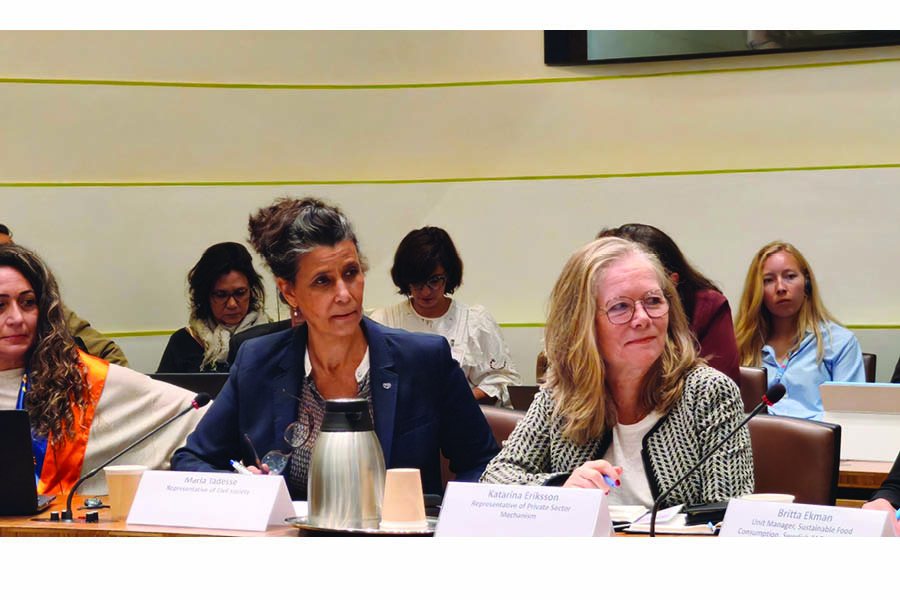
Partnerships emerge as a recurring theme throughout the discussions. Governments cannot achieve large-scale, sustainable school feeding alone – civil society and the private sector play crucial roles in design, implementation, and accountability. Maria Taddesse, Head of Business Development at We Effect shared how the Maya Nutri project in Guatemala links schools and smallholder farmers to provide healthy, locally sourced meals to over 30,000 children. This project combines rights-based approaches, community empowerment, and local food systems, illustrating how civil society can make national programmes more inclusive and resilient. 

From the private sector, Katarina Eriksson from Tetra Pak and the Private Sector Mechanism (PSM) highlighted the importance of contributions for businesses to school feeding programmes through quality, affordability and innovation. First, through aseptic, portion-packaged milk that doesn’t require refrigeration or advanced facilities; second, by offering special institutional pricing and avoiding retail markups; third, by developing fortified foods that address nutrient deficiencies in target groups. Such partnerships demonstrate how public and private actors can align to achieve large-scale nutritional and educational outcomes. 

 Sweden’s continued leadership 

Sweden’s leadership in school meals remains strong, grounded in its own long history. For over 80 years, Swedish children have received free, nutritious meals at school – a policy initially introduced in the 1940s to improve public health. Since 2011, the Swedish Education Act has required that all school meals be not only free but also nutritionally balanced. 

As Britta Ekman from the Swedish Food Agency explained, Sweden’s holistic “meal model” defines six quality dimensions: meals should be tasty, safe, nutritious, pleasant, eco-smart, and integrated into education. This commitment extends beyond Sweden’s borders. Through Nordic cooperation, Sweden and Finland co-chair the School Meals Coalition. Finland’s €12.9 million contribution to the World Food Programme (2023-2025) to strengthen school meal systems globally underscores the region’s continued leadership.   

Maria Taddesse (left), Head of Business Development, We Effect and Katarina Eriksson (right), Food for Development Director, Tetra Pak.

Scaling Up for 2030 

Sweden’s experience illustrates the importance of school meals in implementing scalable solutions. Investments are increasing, partnerships are multiplying, and successful models are emerging worldwide.

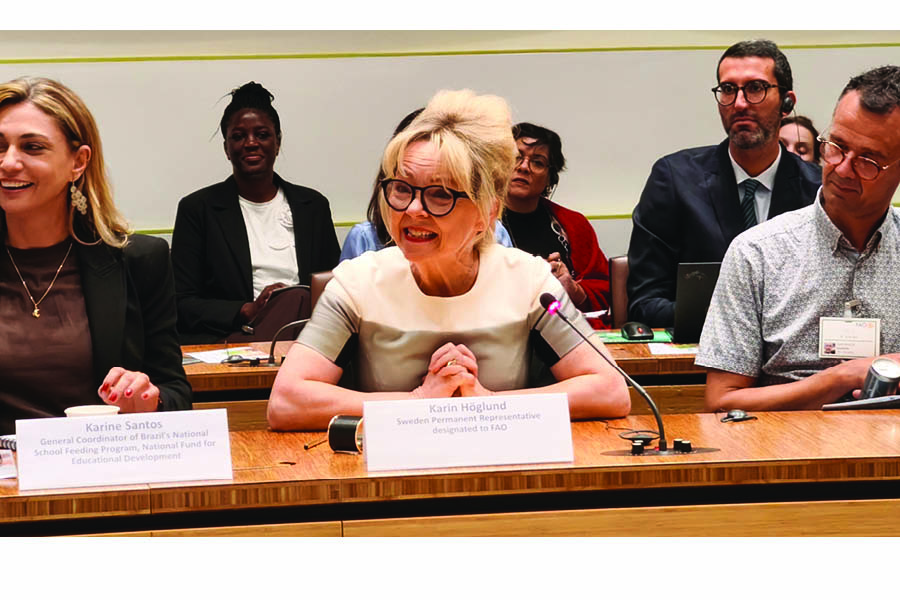
As Sweden’s Permanent Representative, Karin Höglund, concluded:

“Investing in school meal programmes pays off.”

These programmes improve nutrition, boost education outcomes, support local farmers, empower women, and strengthen economies. Above all, they embody dignity and equity by ensuring that every child has access to a nutritious meal.

Achieving universal school meal coverage by 2030 will require scaling up successful models, sustained financing, and stronger partnerships. The message from the CFS event is clear: school meals are more than food; they are a powerful investment in human potential, resilience, and a more equitable future.

Karin Höglund, Ambassador of Sweden to Italy. Photo by FAO.