
Today, 16 October, we celebrate World Food Day, which this year also marks the 80th anniversary of the UN Food and Agriculture Organization (FAO). This 2025 theme, “Hand in Hand for Better Foods and a Better Future,” calls for renewed global collaboration among “governments, organizations, sectors and communities” to transform agrifood systems for a food-secure future.
World Food Day: Achieving food security and environmental integrity are inseparable goals
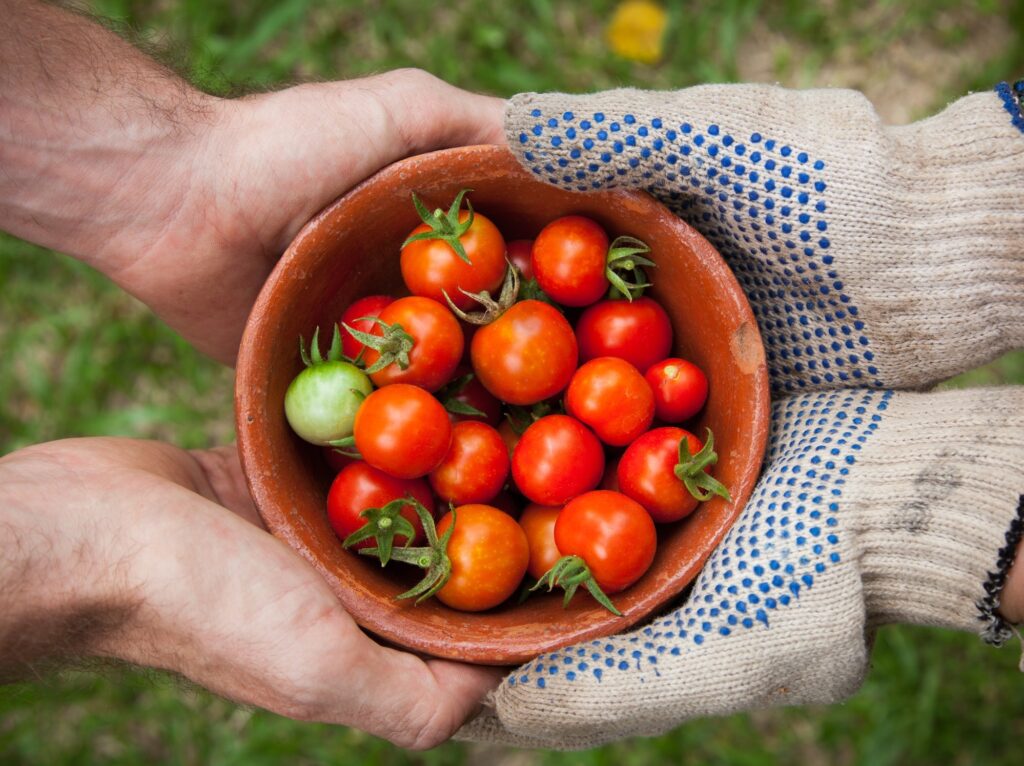
Drawing on the FAO’s four pillars for food systems transformation – better production, better nutrition, better environment and a better life – SEI experts reflect on the role of research and international cooperation, and share where we can start today to secure a better tomorrow.
Better production: transforming systems for people, animals and the planet
Industrial agriculture is the leading driver of climate change and biodiversity loss. Our food system has evolved through decades of changes – from the rise of industrial farming to the dominance of ultra-processed foods – and must now transform again to stay within planetary boundaries.
A better future depends on transitions that are rapid yet just, ensuring availability and accessibility of nutritious food for all, while and staying within planetary boundaries while empowering smallholders and subsistence farmers and safeguarding animal health and welfare.
A holistic approach to food, health and the environment
Industrial animal agriculture poses not only environmental but also public health risks, including zoonotic diseases (those transmitted from animals to humans), the rise of non-communicable diseases and the threat of antimicrobial resistance – not to mention animal welfare concerns. Reform is urgently needed, but it must also be equitable and inclusive.
SEI’s research promotes agroecology and other approaches that support smallholders and subsistence farmers while reducing environmental impact. There can be no sustainable or healthy future without considering human, animal and planetary health holistically.
Holistic approaches such as One Health help minimize trade-offs and identify synergies. Tools like SDG Synergies enable policymakers to apply research insights to understand how goals interact, helping design more coherent and equitable transitions in global food systems.
At the same time, intergovernmental institutions must address the concentration of corporate power in industrial animal farming and its contribution to global overconsumption, climate change and the decline of subsistence farming systems. As a global convenor, the FAO has a vital role to play in championing this integrated vision, moving beyond narrow production targets to ensure that governments uphold equity, sustainable consumption and public health.
Bridging the data gap to turn insights into action for more sustainable food systems
Building sustainable food systems begins with understanding how and where food is produced, the vulnerabilities those areas face, and the systems governing their management and evolution. Yet a major gap in food systems data persists: local datasets are often rich but fragmented, while global datasets are comprehensive but lack the detail needed for practical action.
Closing this gap is crucial to translating evidence into context-sensitive and globally relevant decisions. National governments, often with FAO’s technical and financial support, generate agricultural surveys and censuses that form the backbone of food systems monitoring.
Through the GSAP project and the HarvestStat consortium, SEI is working to make these data more accessible, interoperable and usable. Continued collaboration with FAO offers opportunities to align methodologies, integrate findings and co-develop tools that extend the reach and policy relevance of this work – advancing a more sustainable and equitable food future.
Better nutrition: ending hunger through smarter, sustainable food systems
Despite advances in agricultural technology, 673 million people – about 8.2% of the global population – still face hunger, while 2.33 billion experience food insecurity. At the same time, 13.2% of food is lost post-harvest and another 19% is wasted at retail and household levels – together accounting for nearly 10% of global greenhouse gas emissions.
These trends undermine progress toward SDG 2 (Zero Hunger) and SDG 12 (Responsible Consumption and Production). Tackling them requires smarter, more sustainable, and fairer food systems.
What governments can do
To reverse current trends, national governments should:
- adopt integrated food policies that incentivize regenerative and sustainable agriculture,
- expand public investment in sustainable irrigation, storage and transport infrastructure,
- strengthen food loss and waste regulations.
Local governments have a crucial complementary role. They can:
- implement urban and peri-urban food strategies,
- promote short supply chains and farmers’ markets,
- institutionalize school meal programs using on locally sourced produce.
Governments must also anticipate both the positive and negative effects of such policies to ensure vulnerable communities are not disproportionately affected.
At SEI, we support many countries – including Sri Lanka and Colombia – with this type of policy analysis through our SDG Synergies tool.
The FAO plays a pivotal role in coordinating global data systems, supporting evidence-based policymaking, and fostering South–South cooperation to spread sustainable food technologies.
A truly “better” food future depends on shared responsibility – grounded in science, equity and stewardship of the planet’s natural resources.
Better environment: reconnecting agriculture and nature
Multifunctional landscapes to reverse the monocultural cycle
Built on a 19th century logic of efficiency, today’s industrial food system has locked us into a cycle of monocultures. Economic incentives favour the production of a handful of global commodities; supply chains service single crops; and bioeconomies depend on a single type of resource – plant or animal.
This system drives biodiversity loss, land degradation and climate change, while fuelling land-use conflicts where food production and nature conservation are wrongly seen as competing goals.
SEI research challenges this outdated logic by promoting complementary land use between forestry and agriculture. By cataloguing the benefits and trade-offs of multifunctional production systems, we show how agricultural landscapes can work with nature rather than against it.
For instance, increasing tree cover on farms or integrating forest-adjacent agriculture enhances pollination and microclimate regulation, though such systems also require managing pests and disease risks.
Our collaboration with FAO brings together experts across disciplines to connect the traditionally separate domains of forests and agriculture, demonstrating how multifunctional systems can serve both agricultural and conservation needs.
Smart data to support more sustainable water use
Food security and water security are inseparable. Water underpins agricultural production, livestock management, fisheries and food processing. Yet millions of farmers still lack access to clean, sufficient water.
FAO plays a central role in monitoring progress toward SDG 6 (Clean Water and Sanitation), particularly indicator 6.4.2, which measures how sustainably countries use their water resources. However, national-scale reporting can obscure important regional and seasonal variations.
To mitigate this, SEI, in collaboration with FAO, has developed a plug-in for the Water Evaluation and Adaptation Planning (WEAP) system that automates indicator 6.4.2 at sub-national and seasonal scales. This makes it possible to capture how water availability and use vary between agricultural, urban and industrial regions, providing a much more detailed and actionable assessment of water scarcity.
This innovation supports FAO’s broader goal of ensuring sustainable water management and food security under SDG 6, and contributes directly to evidence-based decision-making for improving resilience and equity in water distribution.
Better lives: centring gender equality and social inclusion in bridging evidence and data gaps
Sustainable agrifood systems must be equitable and gender-just. Women play a central role in agriculture, yet their contributions often remain undervalued and invisible. Achieving gender equality means its continued promotion and integration in research-for-development.
Robust evidence is needed to confront systemic gender and social inequalities, especially for women smallholder farmers and diverse social groups, such as youth, Indigenous Peoples and people with disabilities in climate-sensitive regions. These groups are often marginalized from agricultural development and face the highest climate risks.
Through the ASSET project, SEI works with partners to mainstream gender equality and social inclusion in agrifood research – ensuring that policies and innovations reflect the lived realities directly of women and socially marginalized groups.
Towards gender-just and inclusive food systems
At a time when backlash against gender equality and social inclusion threatens hard-won progress, evidence-based and gender-just climate is more vital than ever. Agrifood systems research must:
- Recognize smallholder farmers as co-producers of knowledge, particularly women and marginalized groups. Interdisciplinary research and use of mixed methods can break down silos and allow farmers to share their lived experiences, realities and aspirations.
- Acknowledge farmer diversity to co-develop context-specific innovations and policies that reflect local realities – for instance, in climate-vulnerable regions such as Southeast Asia.
- Move beyond numerical targets to empowerment and transformation, guided by frameworks such as Reach-Benefit-Empower-Transform, which promotes focus on tackling structural barriers and shifting unequal power dynamics.
- Secure adequate funding for participatory and inclusive research that informs gender-transformative and inclusive policies and practices.
Working hand in hand for a better food future
As FAO celebrates 80 years of leadership, World Food Day reminds us that achieving food security and environmental integrity are inseparable goals. The four “Betters” – production, nutrition, environment and lives – are not separate challenges but interconnected pathways toward a more resilient, equitable and sustainable world.
By working hand in hand, across disciplines, sectors and borders, we can build food systems that nourish people, protect the planet and empower communities – ensuring a truly better future for all.
This perspective was originally published by the Stockholm Environment Institute here.