The Agri4D Conference took place this year at SLU. Among the many scientific discussions, I designed and facilitated an alternative workshop—The Journey of Seed, an embodied workshop that explored our relationship with seeds through reflection, creativity, and immersion in the form of art.
Seeds are the very foundation of our life. Yet, its diversity has been lost at an unprecedented rate. Between 1900 and 2000, we lost more than 75% of our crop diversity, and today, over 56% of the commercial seed market is now controlled by just four major agribusiness companies. Our food system is in precarious condition.
Today, like food, seeds have become entangled in political and economic systems, and even weaponized by war amidst the planetary crisis we are facing. On top of that, we are also suffering from a crisis of imagination, we can’t imagine another alternative. In some regions, seed banks and fields have been deliberately destroyed, while in others, seeds are locked away in Arctic vaults, far from farmers and communities, with the hope that one day, custodians will bring them back to life in the fields nurturing and sustaining our food system.
We often hear the phrase, “Have you eaten today? Thank a farmer.” But how often do we pause to think about the seed, the very beginning of that food? A seed is not just a capsule of DNA; it carries culture, history, and the potential for life. Seed is food, fullness, beginning, and hope. When it disappears, a part of our collective memory disappears with it.
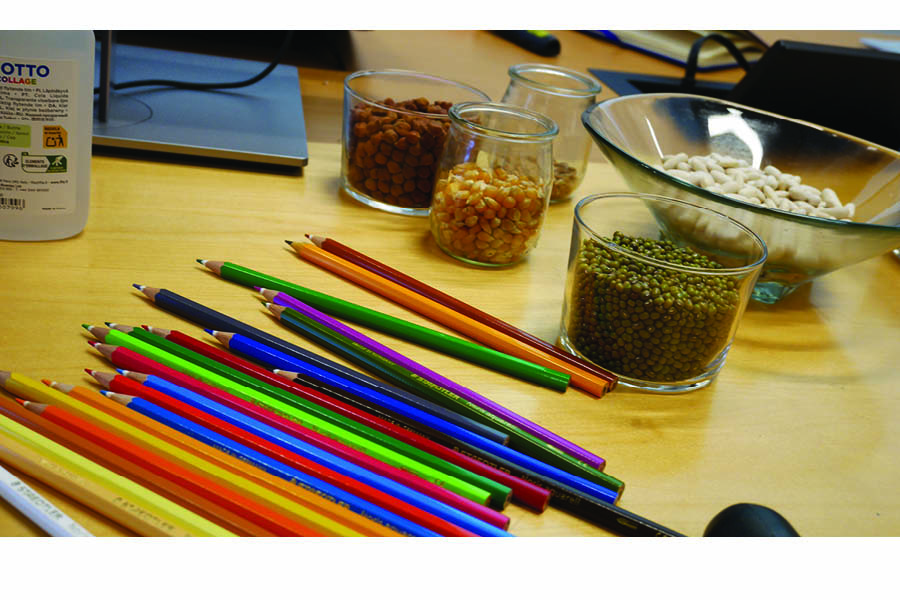
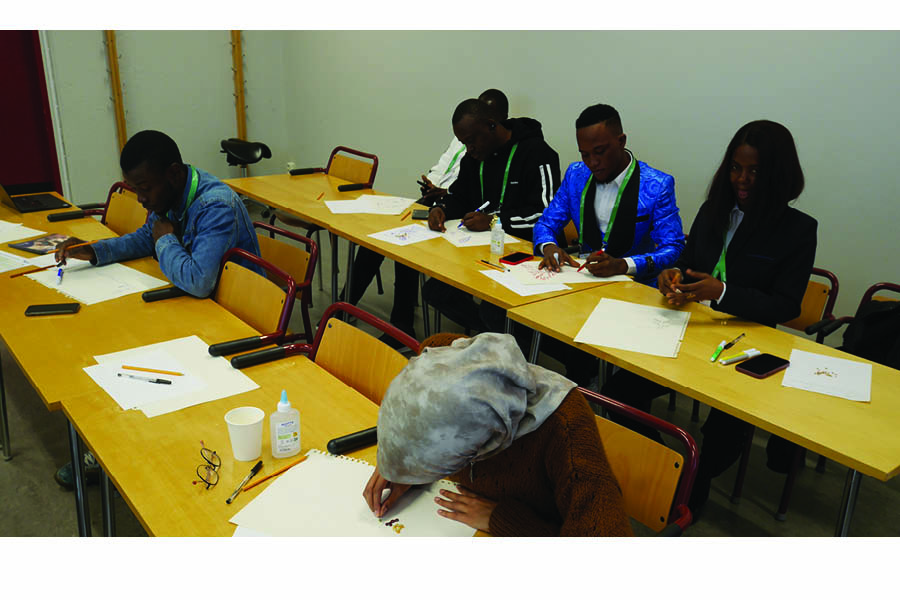
To reflect on and reconnect with seeds, The Journey of Seed was organized as a first-of-its-kind session at Agri4D. Eight participants joined, half of them youth. Through guided meditation, they were invited to connect with indigenous variety of seed and imagine the journey of a seed, from past to present to future. Later, using seeds and art materials they expressed their imagination through simple, creative art.