Skip to content
Start of page content below the header
Nyhet
10 November 2025
Författare: Karolin Andersson

Farming for better health at the Botildenborg farm 

Photo by Maria Östgren

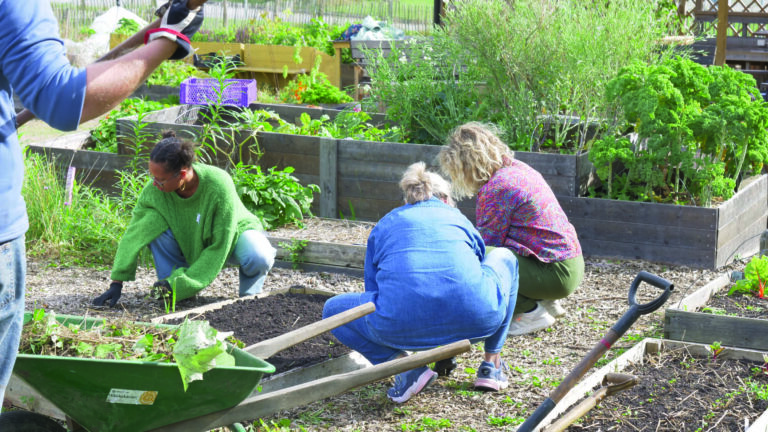
Amid the fields of Botildenborg Social Farm and Kitchen in Malmö, Sweden, a sense of optimism buzzed in the crisp autumn air. As part of the Urban Food & Farming Week 2025, the conference day ‘Farming for Better Health’ brought together researchers, civil society actors, municipal representatives and project participants to explore how farming and nature can enhance health, well-being and social connection, in rural as well as urban areas. 

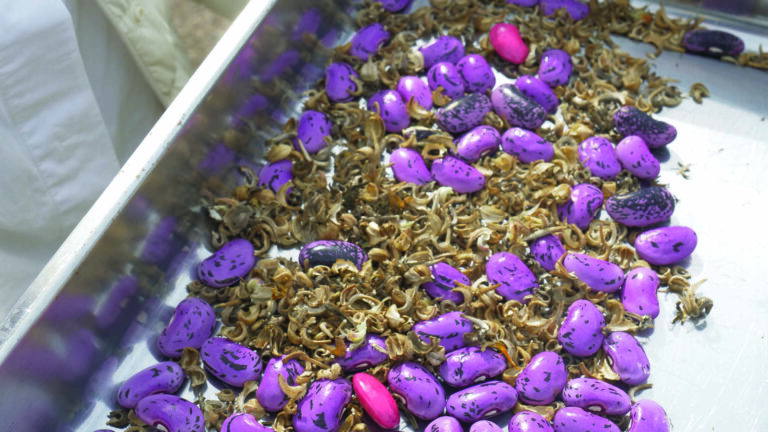
The week-long celebration of urban food and farming, from 21–25 September, featured various activities such as a harvesting feast at Botildenborg’s farm, a food market and workshops on kimchi-making and year-round cultivation. After morning coffee amid the lush environment and colourful late summer harvests, the opening session hosted by GREENHANCEnbt and Botildenborg immediately set an inspiring tone for the day. Lotta Nilsson, project leader at Botildenborg, together with members of “Farming Together” project, spoke passionately about intergenerational gardening projects that connect children and seniors, demonstrating how shared cultivation can strengthen both physical and mental health, reduce loneliness and create a sense of belonging. 

Elin Taube, researcher at Malmö University, presented findings on seniors’ well-being, highlighting how regular interaction with plants and soil can ease stress, enhance mobility and improve social cohesion. 

The focus shifted to nature-based rehabilitation (Swedish: natur-understödd rehabilitering, NUR), with Anders Folkesson from Sövröds Hage located in Skåne, and Anna María Pálsdóttir, docent at the Swedish University of Agricultural Sciences (SLU). Their presentations covered how innovative approaches to health through engagement with natural environments can support both mental and physical rehabilitation, offering sustainable solutions that integrate into community life. 
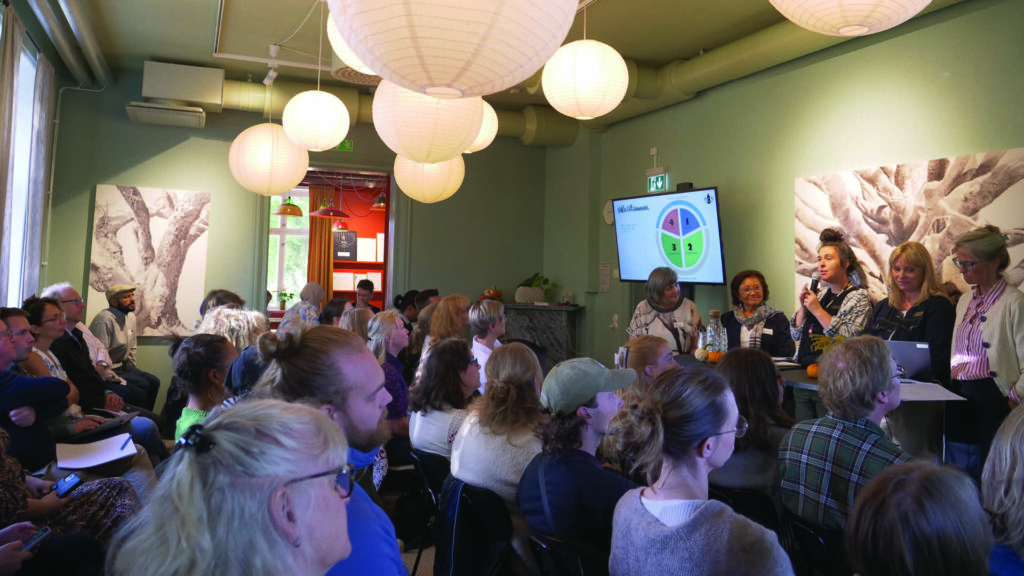
Photo by Maria Östgren.

After a short fika break, the day continued with an international outlook. Luca Battisti from the University of Turin presented research on urban gardening in Italy highlighting the positive impact of urban green spaces on social interaction, stress reduction and overall urban well-being.  

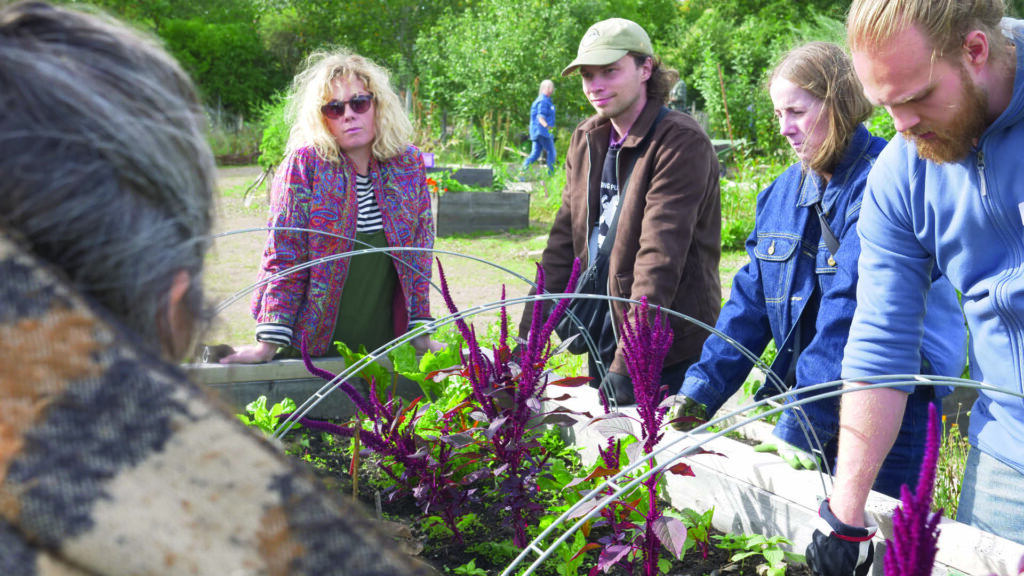
The day brought a hands-on workshop with the Botildenborg juice-maker ‘I goda äpplens lag’, where participants made ‘shrubs’, a fruit-infused vinegar syrup, and worked the farm in the beautiful environment. As attendees rolled up their sleeves and worked side by side, the farm became a space for dialogue, learning and shared inspiration. These practical moments bridged  theory of research with the lived experience of cultivation. 

A great sense of optimism and dynamism defined the day. Urban farming and engagement with nature was not only seen as beneficial for health, but also as a pathway toward social and environmental sustainability. Representatives from municipalities discussed integrating gardening initiatives into city planning, while civil society actors highlighted projects that combine community participation, biodiversity and public health objectives. Throughout, researchers, practitioners and project participants shared evidence and ideas, contributing to a collaborative and forward-looking atmosphere. 


Photo by Maria Östgren.

Photo by Maria Östgren.

The Botildenborg farm itself was more than a venue; it was a living example of the day’s message. Its vibrant multifunctional farm and green areas invited curiosity, dialogue and reflection. An inspiring and invigorating model of how connecting people with both food and nature has a positive impact. 

As the day concluded, it was clear that ‘Farming for Better Health’ had succeeded in more than just sharing knowledge. It had cultivated connections, sparked ideas, and reinforced the shared belief that nature and farming are essential tools for enhancing well-being in urban settings. For many attendees, the conference was not the end of a conversation, but the beginning and continuation of collaborative projects for sustainable urban and rural health. At Botildenborg, these ideas were not just discussed – they were lived, grown and shared. 

Botildenborg is a farm and meeting place in the middle of Malmö, Sweden, that seeks to contribute to social, environmental and economic sustainability through food and farming and through the creation of work, knowledge and community. The aim of Botildenborg is to contribute to the strength and growth of people and societies by combining social and ecological resilience and develop methods that make a difference in people’s everyday lives and for the future of the city. Every year, around 400 participants visit the farm through a range of projects and activities, such as a school garden, training for work life, ‘language farming’ and training for urban farmers. They welcome around 10 000 visitors yearly to markets, lunches and conferences. 

Etiketter