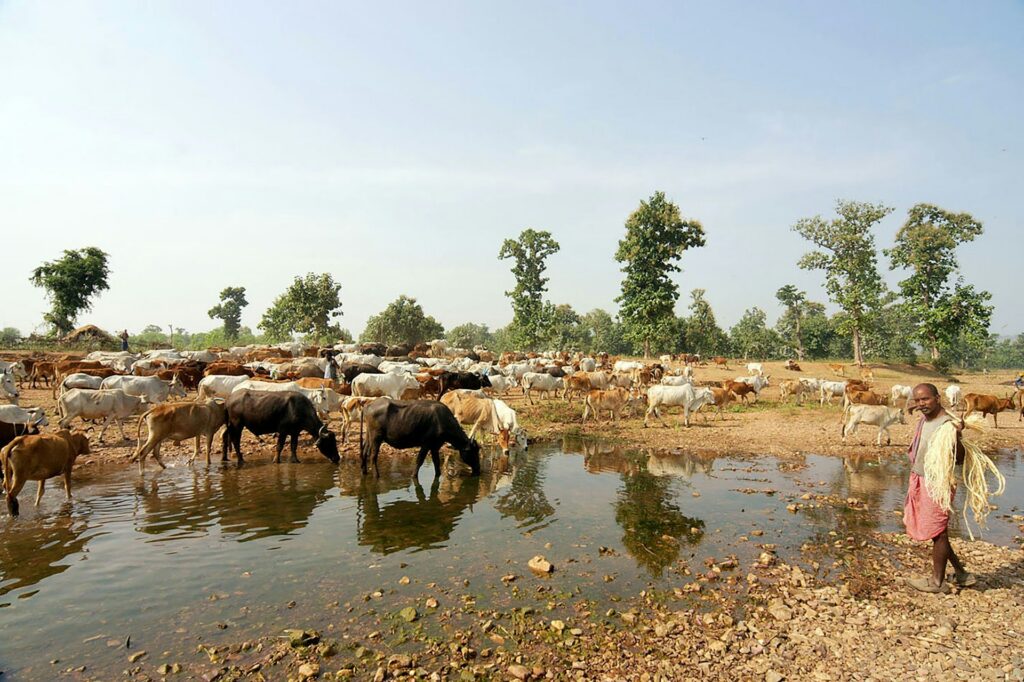
This event will explore the common challenges and opportunities that young pastoralists around the world face in sustaining and developing their livelihoods. Particular attention will be given to transhumance—not only as a pastoral practice, but also as a vital expression of cultural heritage and territorial cohesion—as well as to the public use and protection of livestock trails, which continue to serve as essential collective resources.
Global Pastoralism, with its rich socio-economic and cultural heritage and proven public benefits, has a key opportunity to highlight its challenges and to demonstrate its vitality and ability to overcome its own problems as well as those widely affecting rural development, food security and environmental sustainability.
Due to its millennia-old history, pastoralism is at present often considered as an old-fashioned, traditional activity related to poverty and ignorance. However, thanks to the fact that it is based on ancient knowledge, pastoralism is demonstrating itself to be a very important way of life and of management of all kinds of landscape, especially the marginal ones, or those with extreme climatic or geographical conditions.
Young people, often with higher education and more open to handling new technologies, frequently feel undervalued by their own communities, which leads them to abandon or not fully develop their livestock activities.
One of the key challenges is the poor image and lack of social recognition of rural professions, which discourages youth from engaging in them. It is therefore essential to promote the value of these careers and improve their public perception.
Despite its general decline in almost all countries, extensive livestock farming is experiencing also a resurgence among young people through numerous innovative initiatives that facilitate the development of this practice.
Throughout Europe, the Mediterranean and Africa, a multitude of innovative initiatives are emerging, revolutionising traditional herding systems. This meeting aims to present and compare these initiatives, allowing livestock farmers and shepherds to apply them in their own regions and localities.
New technologies are also making livestock management more attractive and viable for young people, offering them modern tools to engage in innovative and labour-efficient pastoralism.
MEETING OBJECTIVES
- Empower pastoralist youth to become agents of change in their pastoralist communities
- Increase young pastoralists’ as well as pastoralist youth organisations’ participation
- Promote the active engagement of pastoralist youth in decision-making processes related to pastoralism and rangeland management
- Advocate for policies that recognise and support the unique contributions of pastoralist youth to sustainable pastoral livelihoods and rangeland management
- Foster knowledge exchange and collaboration among pastoralist youth at local, national and international levels
- Enhance the image and societal recognition of rural professions and promote their attractiveness to youth, especially through the integration of modern technologies
More information here.