Madagascar faces multiple challenges: climate change, poverty, deforestation, and land degradation threaten agricultural productivity, household nutrition, and rural livelihoods. Introducing Black Soldier Fly (BSF) farming into agricultural practices can alleviate some of these pressures by transforming organic waste into high-protein feed and nutrient-rich fertilizer for crops. The Madagascar Biodiversity Center (MBC) is currently working to introduce and strengthen BSF farming in Farafangana, in collaboration with Health in Harmony (HiH), and across other sites including Fénérive Est and Anivorano. Supported by the SIANI Small Grants Program, these efforts demonstrate how local innovation and farmer-to-farmer learning can transform organic waste into valuable food, feed, and fertilizer, contributing to sustainable agriculture.
Farmer-led black soldier fly farming innovations in Madagascar
Small intervention, big results
The progress of MBC’s work is now visible across all three intervention sites.
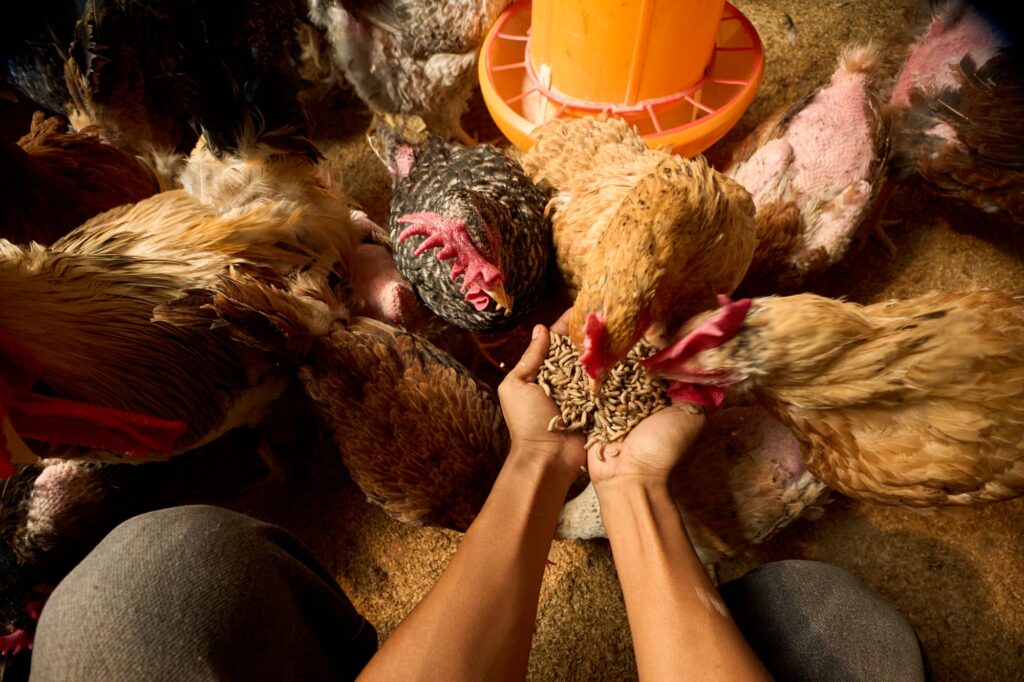
- Farmers are producing between 5 and 25 kilograms of fresh larvae and 25 to 95 kilograms of BSF frass per cycle, providing high-quality poultry feed and nutrient-rich fertilizer for crops.
- BSF-fed chickens are sold at 35,000 MGA, a 75% increase compared to the previous price of 20,000 MGA.
- Egg production has doubled, with hens laying an average of 20 eggs per cycle.
These outcomes demonstrate how BSF farming can strengthen livelihoods, improve household nutrition, and advance circular, regenerative farming practices, offering a sustainable model for rural communities.
Success lies in local adaptations and innovations
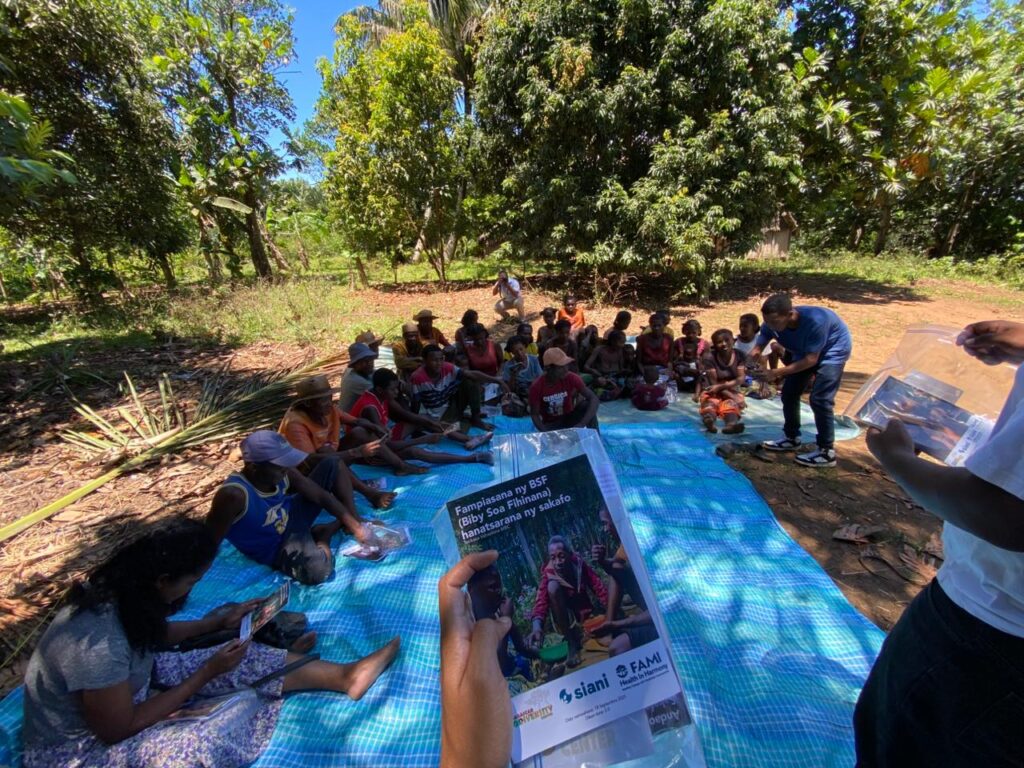
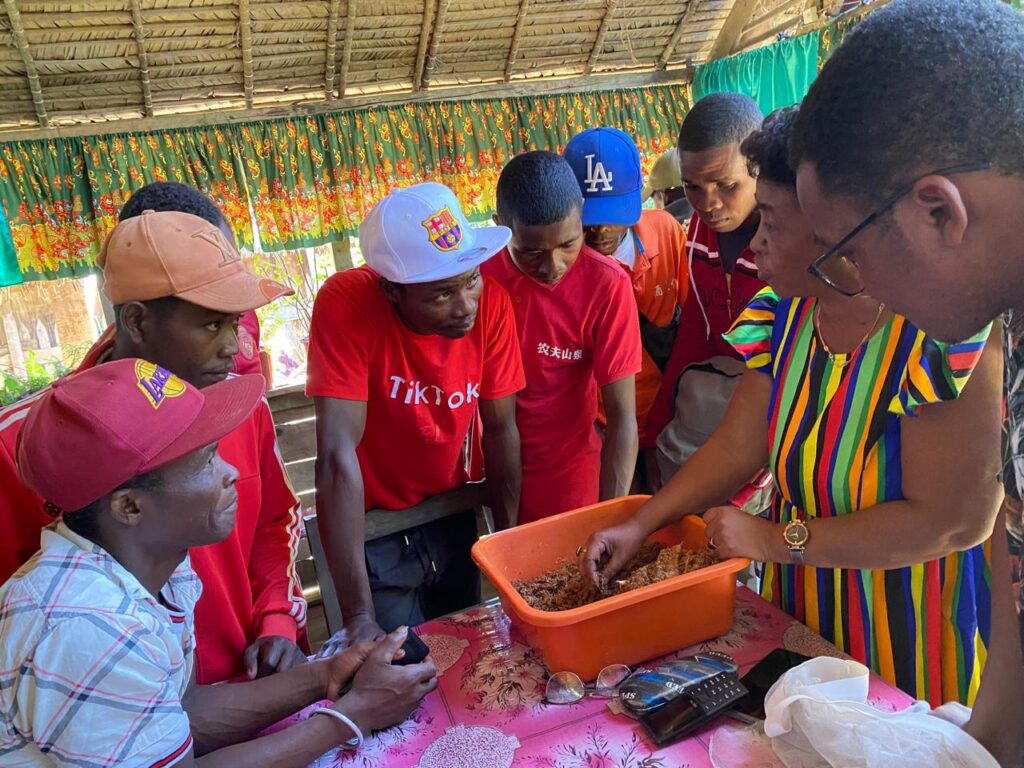
BSF farming is not a one-size-fits-all approach; for best results, it needs to be adapted to local conditions. Farmers often face similar challenges, such as managing pests like ants and rodents, controlling moisture, and collecting eggs efficiently. The Madagascar Biodiversity Center set up farmer-to-farmer exchanges to encourage BSF production by learning from peers with experience. . Farmers shared simple, low-cost solutions to overcome common obstacles, demonstrating how local creativity turns constraints into opportunities.
Experienced farmer Mrs. Fanja highlighted her own innovations, such as using natural attractants and integrating frass composting with banana stems, improving both larval yield and fertilizer quality.
“The presence of Mrs. Fanja is very helpful because she knows her stuff and it is easier for us to understand what she explains.”
Farmer-to-farmer exchange participant
Learning directly from peers proved to be very valuable for boosting motivation, confidence, and the adoption of BSF farming:
“Although we have just started our farms, we are so lucky to learn from you guys because we are learning from your experiences and are now super confident in our success.”
Farmer-to-farmer exchange participant
BSF Farming: where to start?
Building on these successes, MBC, with the support of the SIANI Small Grants Program, has strengthened its educational tools across all sites. Seven “how-to” videos, available on MBC YouTube or Facebook page, provide step-by-step guidance on challenges most commonly faced by farmers. Inspired by real issues identified during workshops and field visits, these videos use practical, low-cost local materials and techniques, allowing farmers to strengthen their skills, stay motivated, and apply the lessons directly on their farms.
MBC has also developed three practical guides that support farmers throughout their BSF journey:
- BSF farming provides detailed explanations of each stage of the BSF farming process, including required materials and maintenance.
- BSF as feed and fertilizer guides farmers on using BSF products to sustainably improve livestock feeding and crop production.
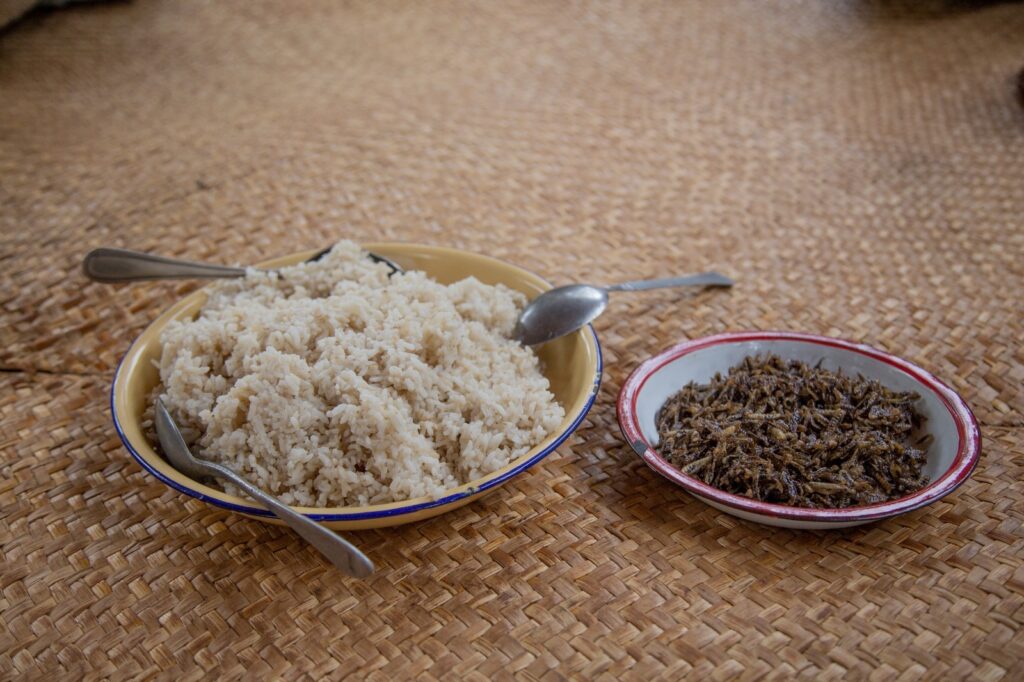
- BSF as food offers guidance on safely cooking and consuming BSF-based foods to enhance household nutrition.
All tools were also produced in Malagasy, ensuring accessibility and empowering farmers to learn and share knowledge within their communities, while supporting consistent practices across all sites.
Encouraged by these outcomes, MBC will continue facilitating farmer-to-farmer exchanges, distributing the BSF guide series, and expanding the production of “how-to” videos. By turning organic waste into food, feed, and fertilizer, these initiatives are proving to be powerful catalysts for scaling sustainable agriculture. Supporting learning through accessible, locally relevant tools further strengthens their impact, improving livelihoods and building resilience across Madagascar.