
In conversations about the future of food, climate, and work, a common thread emerges as both the most affected and the most overlooked: young people. Youth bring not only energy and innovation, they bring clarity about the kind of future they want, as well as the one they wish not to inherit.
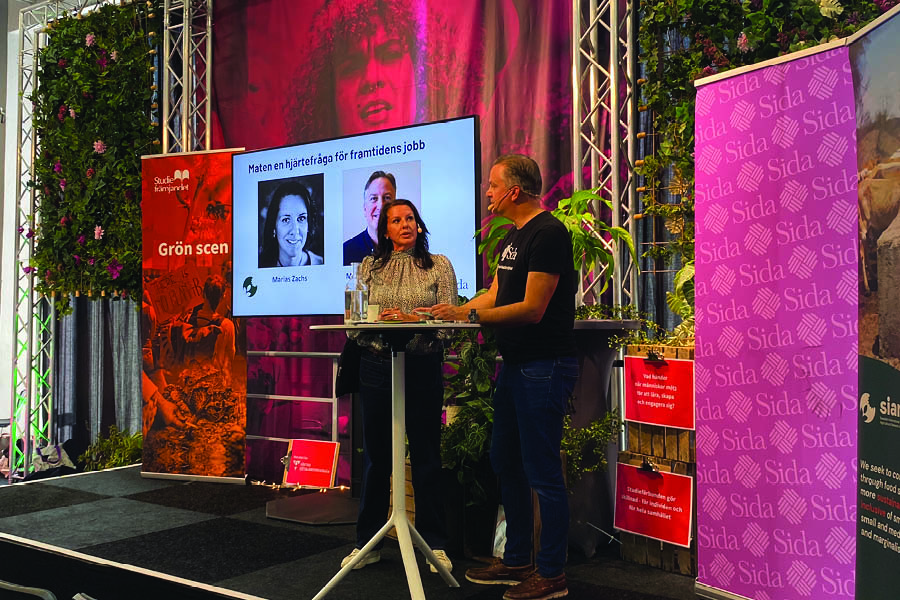
How can young people drive the transformation of our food systems – not just as “leader of tomorrow” but as active agents of change today? This question was at the heart of SIANI’s and Sida’s co-organised seminars at SIDA’s 60th anniversary and at the Gothenburg Book Fair. These discussions together painted a vivid picture of the challenges and opportunities facing young people today as they navigate employment, empowerment, and innovation in the food sector.
Youth empowerment and agency
At the Gothenburg Book Fair seminar “Food is a key issue for the jobs of the future”, Maria Zachs, founder of Voices4Change, shared insights from her work with young people in the informal settlements of Nairobi. Through initiatives like Growth4Change and #FoodIsPolitics, the organisation supports youth-led action in areas such as hydroponic farming, artistic expression, and local leadership.
Zachs underscored the importance of viewing beneficiaries as equals, not as people in need of saving. They are just as capable, intelligent, and driven as anyone else; the difference often lies in access to resources and opportunity. Recognising this is fundamental to true empowerment, especially when it comes to youth. Too often, we hesitate to invest in young people simply because of their age or limited work experience. But those aren’t always the most important factors. With fresh and unique perspectives, young people often bring different, and sometimes even more effective tools and perspectives for driving progress in our food systems.
“Young people are vital to the future of our food systems – they bring momentum and a sense of hope unlike any other generation.” – Maria Zachs
At the two workshops at SIDA co-organized with SIANI, where youth-driven initiatives were placed in focus – Ebba Engström, PhD Student at Imperial Collage London and active in the World Food Forum’s Young Scientists Group, argued that empowerment cannot be defined only through innovation and technology. Instead, she emphasized, it must stem from understanding youth experiences and aspirations in context. “We must ask, what do young people want, and how can we create genuine engagement?” ,she said, warning against that youth participation that is merely symbolic.
Leadership opportunities for all
Annika Eriksson from We Effect echoed these concerns. She highlighted that poor working conditions and low pay in agriculture deter young people from entering the sector – a growing threat to future food security. We Effect works to integrate youth into cooperatives, leadership structures and training programs, with special focus on women’s entrepreneurship, climate adaptation, and digitalization.
“Women and youth are agents of change – we must dare to trust that they can lead” she noted.
Returning to the theme of grassroots empowerment, Maria Zachs described how Growth4Change operates as an ecosystem of local changemakers, often led by women using methods like “urban acupuncture” – small, targeted actions that create big local impacts. Growth4change projects employ hydroponic and low-cost technologies powered by solar energy and through peer-to-peer education. Financial sustainability, she argued is key: “Being small-scale and flexible is not a weakness – it is a strength”. However, youth often lack creditworthiness and stable income, requiring new, trust-based financial models that fit the realities of informal economies.
Across both workshops, participants agreed that for youth to become true actors in the food system, development cooperation must be trust-based partnerships. Representatives from SIANI, Sida, We Effect, Hand in Hand, LM International, Stockholm Environmental Insitiute (SEI) and SLU lobal, amongst others, reflected on the need for flexible, locally managed financing, and for recognizing informal actors as legitimate development partners.
Lena Martens Kalmelid from the board of Afrikagruppen, highlighted the study circle model as a powerful tool for empowerment and grassroots learning where participants evolve into community leaders and political voices. Meanwhile, Anna Sjöberg Tibblin from FUF (Föreningen För Utvecklingfrågor) stressed that youth engagement must be seen as relevant now, not only as an investment in the future:
“Young people are not just tomorrows leaders – they are crucial today”.
Kim Andersson from SEI shared practical examples from Bolivia, where challenge funds supported youth and women in developing low-cost, innovative solutions within water and food system. When youth are trusted with resources and space to experiment, he said, they produce ideas with tangible impact on both livelihoods and equality.
Together, these conversations reaffirm a key message: young people are not passive recipients of development, but central actors shaping the sustainability and justice of tomorrow’s food systems. Initiatives like Voices4Change and organizations such as We Effect and SIANI demonstrate that given trust, tools, and autonomy, youth can transform challenges into creative, community-driven solutions.
As SIANI continues to amplify youth voices within the global food agenda, one message resonates clearly – the future of our food systems depends on empowering the very generation already driving change today.