
Skip to content
Start of page content below the header
News Story
23 March 2026

Rural women and the future of agriculture

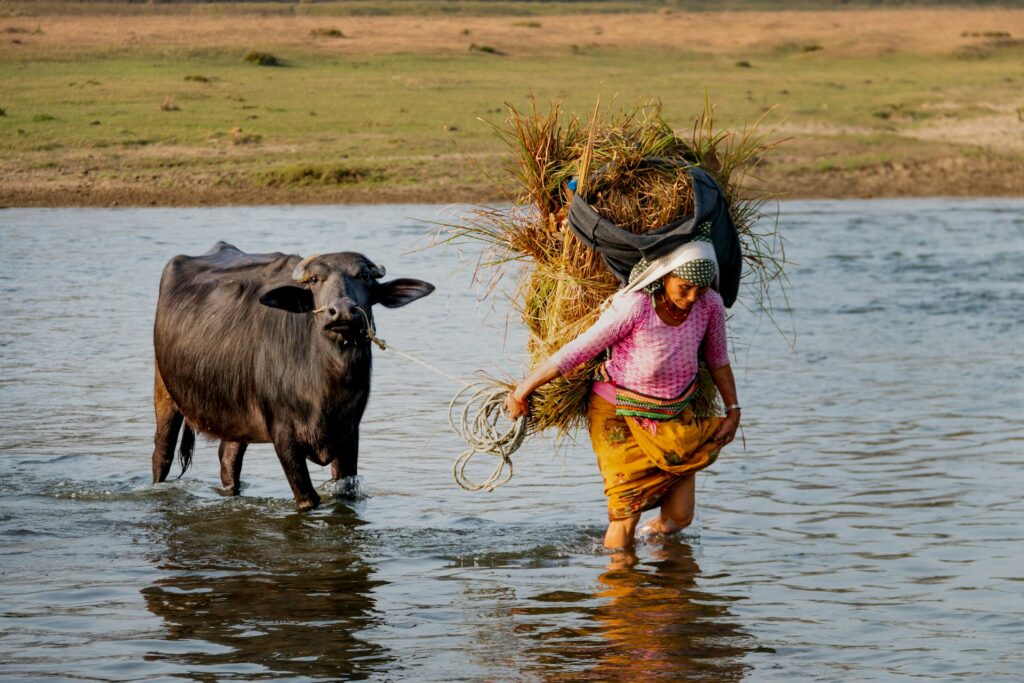
Photo by Sanoyatra, Unsplash

Rural women produce a significant share of the world’s food, sustain local economies and safeguard ecosystems. Yet across continents, from Africa to Europe and Asia, their contributions remain undervalued and constrained by structural inequalities.

Rural women play a decisive role in feeding the world, yet their work often remains invisible, undervalued and constrained by systemic inequalities. An international dialogue held in connection with International Women’s Day and the International Year of the Woman Farmer, highlighted both the challenges rural women farmers face and the transformative potential they hold for building more sustainable and equitable agrifood systems.

Women at the heart of food systems

Across the globe, women are central actors in the whole value chain. Beyond production, rural women sustain local economies, preserve biodiversity and maintain the social fabric of rural communities. Despite these contributions, their work frequently remains informal, underpaid or invisible within official agricultural statistics and policies.

The inequalities they face are stark. Rural women farmers often encounter restricted land and inheritance rights, limited access to finance and technology, and persistent discrimination that frequently goes unchallenged. Yet evidence consistently shows that empowering women in agriculture benefits entire communities. Accordint to the United Nations shows that If women had the same access to productive resources as men, farm yields could increase by 20–30 per cent, feeding an additional 100 to 150 million people.

Sweden’s commitment to gender equality in agriculture

Sweden is a strong advocate for gender equality in global food and agriculture policy. Gender equality is a cornerstone of Swedish society and a key priority in its international development cooperation. In multilateral forums and partnerships, Sweden has supported initiatives that promote equal access to productive resources, leadership opportunities and decision-making within food systems.

This commitment aligns with international efforts such as the Voluntary Guidelines on Gender Equality and Women’s and Girls’ Empowerment in the Context of Food Security and Nutrition, emphasising the importance of gender-responsive policies that address structural discrimination while ensuring women’s access to land, finance, markets and technology.

Beyond policy frameworks, experience from many countries shows that collective action is one of the most powerful tools for advancing rural women’s rights. Women’s cooperatives, farmers’ organisations and grassroots networks have helped women gain access to agricultural inputs, improve market connections and strengthen their bargaining power. Through organisation and solidarity, women farmers are increasingly making their voices heard in policy debates that shape the future of agriculture.
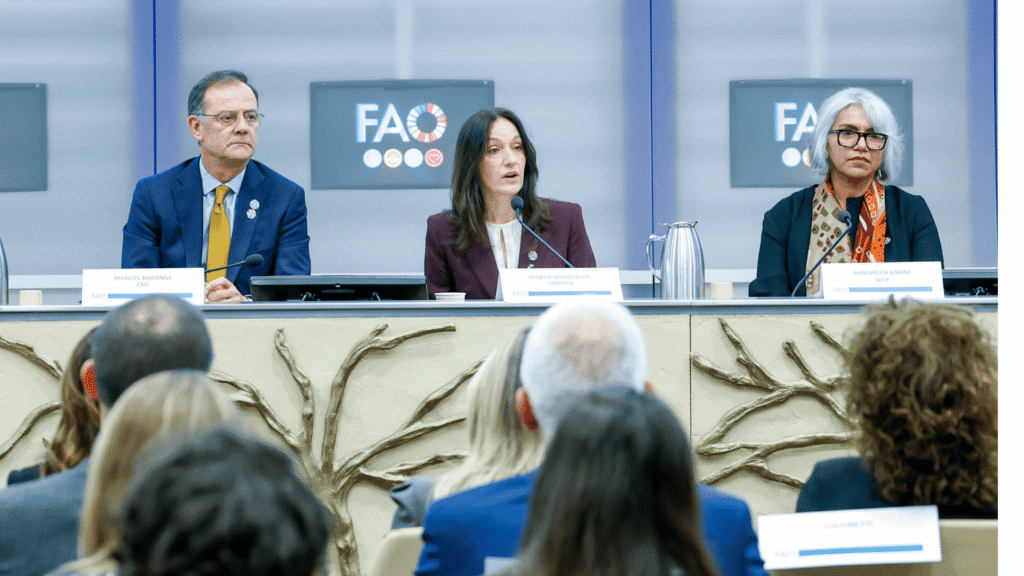
Marija Milivojevic, Agricultural Councellor, Deputy Permanent Representative to FAO. ©FAO/Giulio Napolitano

Between legislation and reality

Even where laws guarantee equal rights such as the Convention on the Elimination of All Forms of Discrimination against Women and the UN Declaration on the Rights of Peasants, cultural norms, administrative barriers and lack of enforcement often prevent women from fully exercising them. In many rural areas, women may still need permission from male relatives to access land or financial services, limiting their autonomy and economic potential. Addressing the non-economic dimensions of poverty and food insecurity is essential to overcoming the barriers that perpetuate social exclusion and gender inequalities. In response, the Food and Agriculture Organizationdeveloped Dimitra Clubs – community groups of rural men and women who come together locally to address daily challenges collaboratively and find local solutions together

Social dynamics also play a role. Women farmers frequently face heavier workloads because they must balance agricultural activities with unpaid care responsibilities. Limited access to childcare, health services and infrastructure in rural areas further restricts their participation in economic and political life.

Addressing these challenges requires integrated gender transformative approaches that combine legal reform, economic support and social change. Improving access to justice for rural women through stronger legal frameworks, better enforcement and local support systems is essential.

New opportunities

Emerging sectors such as the bioeconomy and circular economy also present new opportunities. If gender perspectives are integrated from the outset, these sectors can open pathways for rural women to engage in innovative agricultural practices, value-added production and sustainable resource management.

Research on circular agriculture highlights its potential to support food security while lowering entry barriers for small-scale farmers, particularly women. Because circular systems rely more on resource efficiency and recycling than on costly external inputs, they can offer more accessible opportunities for rural women.

In the long term, circular approaches can promote not only environmental sustainability and social wellbeing but also economic profitability. For example, from an economic perspective, agroforestry “reduces the need for inputs, it is more accessible for female farmers, which can provide new opportunities for women’s empowerment in the rural economy” By strengthening agricultural value chains and encouraging more efficient use of resources, circular agriculture can help empower rural communities. However, for women to fully benefit from these opportunities, they must be recognised as farmers and economic actors in their own right, rather than being confined to the roles of home producers or farm assistants.

From recognitation to action

Ultimately, achieving more just and resilient food systems requires recognising rural women not as a vulnerable group in need of protection, but as leaders and innovators capable of driving transformation. When rural women farmers have secure land rights, access to markets and a voice in decision-making, the benefits extend far beyond individual households; strengthening food security, rural livelihoods and environmental sustainability.

As global attention grows around the role of women in agriculture, the challenge now is to translate commitments into concrete action. By addressing structural inequalities and investing in women’s leadership, countries can move closer to building food systems that are not only productive, but also fair, inclusive and sustainable for future generations.