Skip to content
Start of page content below the header
Blog Post
20 April 2026

Engineered erosion: Citizen Science and the battle to save Lake Sebu’s soil in the Philippines

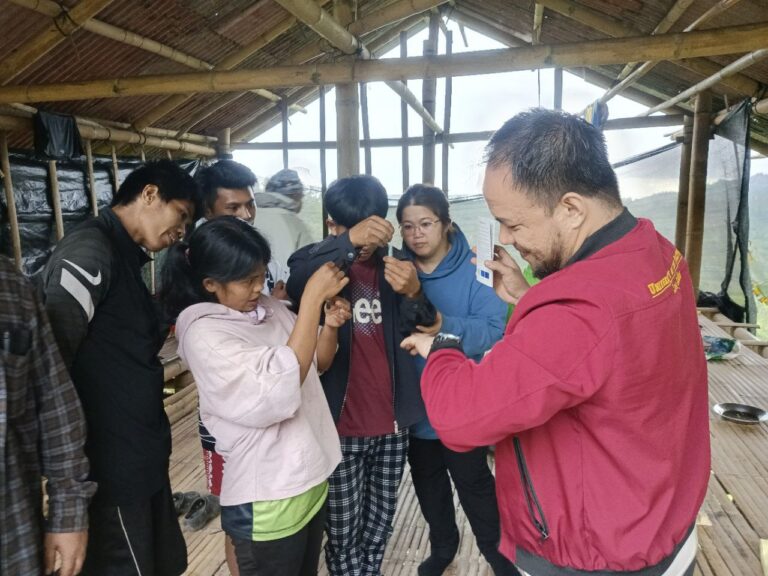
MASIPAG Mindanao Coordinator Leo XL Fuentes demonstrating to LFA members several layers of soil as they are about to measure soil texture.  Photo by MASIPAG Mindanao.

In the upland farms of Lake Sebu, South Cotabato, corn farming is more than an agricultural activity, it is a lifeline for many rural and indigenous farming communities, including members of the Tboli tribe. Traditionally, the Tboli community have been practicing self-reliant food systems, including aromatic upland rice varieties. Over the past decade, farming practices in the region have undergone significant transformation. The penetration of synthetic chemicals, including herbicides, has led to a decline in traditional upland rice varieties’ genetic diversity, posing further threats to upland rice production in the area. The introduction of genetically modified (GM) corn varieties, engineered to resist glyphosate, particularly herbicide-tolerant (HT) corn (Roundup Ready Corn) paired with glyphosate promised increased yields, reduced labor, and better pest management.

However, farmers and local organizations began noticing changes in soil condition, crop performance, and community health. This case study presents the experience of farmers from Sitio Tenetem, Barangay Lamlahak, where a citizen science research project led by the Farmer‑led network, MASIPAG and supported by the Swedish Society for Nature Conservation investigated the environmental, economic, and social impacts of glyphosate use in corn farming.

The Farms of Sitio Tenetem

Sitio Tenetem is a mountainous farming community situated approximately 1,120 to 1,128 meters above sea level. The terrain is steep, with slopes reaching up to 50%, making the soil particularly vulnerable to erosion.

For generations, farmers relied on traditional rotational cropping systems that included upland rice and native corn varieties. These practices preserved soil fertility and biodiversity. However, in recent years, chemical-dependent farming began replacing traditional methods due to aggressive promotion of GM corn and herbicide-based weed control.

The Farmers’ Story

Path 1: Traditional Farming: Mang Ramel, a member of the Lem Bulol Farmers Association, continued practicing traditional farming methods. His farm relied on manual weed control, crop rotation, and organic soil management. His farm soil contained richer vegetation, measuring approximately 620 grams of plant biomass per square meter, and showed higher biological activity with earthworms present in most sampling points.

Although his yields varied depending on rainfall and pest pressure, his production costs were low, and he maintained control over seed saving and planting practices.
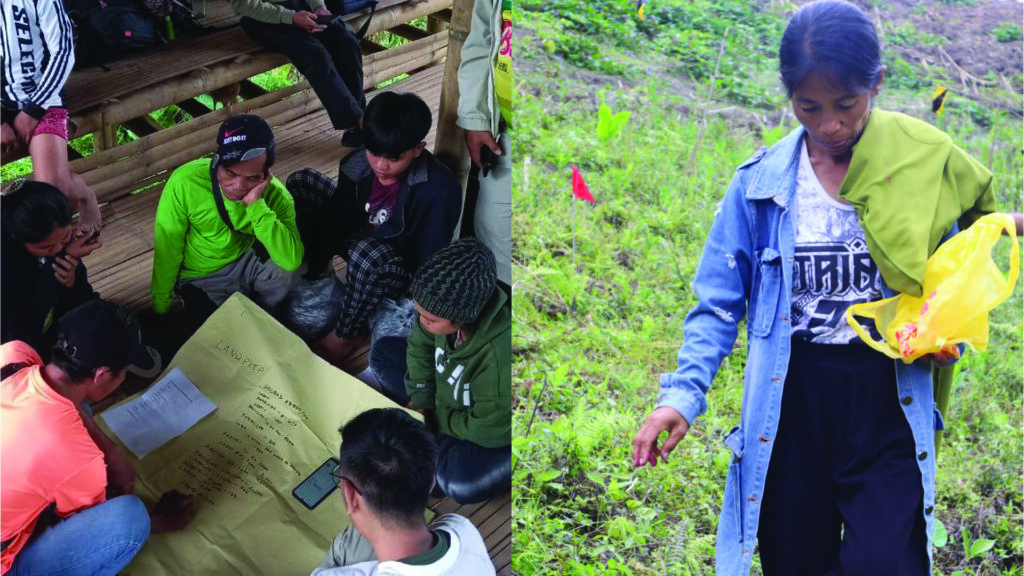
Left picture: Mang Ramel Samulde (in orange shirt) discussing among members of LFA the cost-return analysis of their traditional corn farm. Right picture: Jenilyn planting HT corn seeds in their farm in Lake Sebu. Photo by MASIPAG Mindanao.

Path 2: Conventional Farming with Glyphosate: In contrast, the farm of couple Mang Loreno and Jenilyn adopted HT corn and glyphosate herbicide after attending agricultural promotion seminars. The herbicide simplified weed control, reducing labor requirements and initially improving crop appearance.

However, over time, subtle changes emerged. Vegetation cover dropped significantly to only 220 grams per square meter, and earthworm presence declined drastically, indicating reduced soil biological health.

Mang Loreno also faced rising production costs due to the need to purchase seeds and chemical inputs. His financial records revealed a net loss of Php 10,245 (1,500 kronor) per hectare during one cropping season, placing his household at economic risk.

Citizen Science in Action

Concerned by these changes, local farmers collaborated with MASIPAG researchers to conduct a participatory study. With objectives defined and taking note of current capacities on research, small farmers, in partnership with scientists and MASIPAG staff, were able to lay down the research scope and methodologies. Farmers themselves installed stainless soil rods and collected monthly soil erosion data across two farm sites, traditional and glyphosate-based, thereby fostering active engagement in the research process. Employing citizen science research to involve the local community has in this case proved very beneficial and resonated well with MASIPAG’s farmer-led development approach.

MASIPAG Mindanao Coordinator Leo XL Fuentes demonstrating to LFA members several layers of soil as they are about to measure soil texture. Photo by MASIPAG Mindanao.

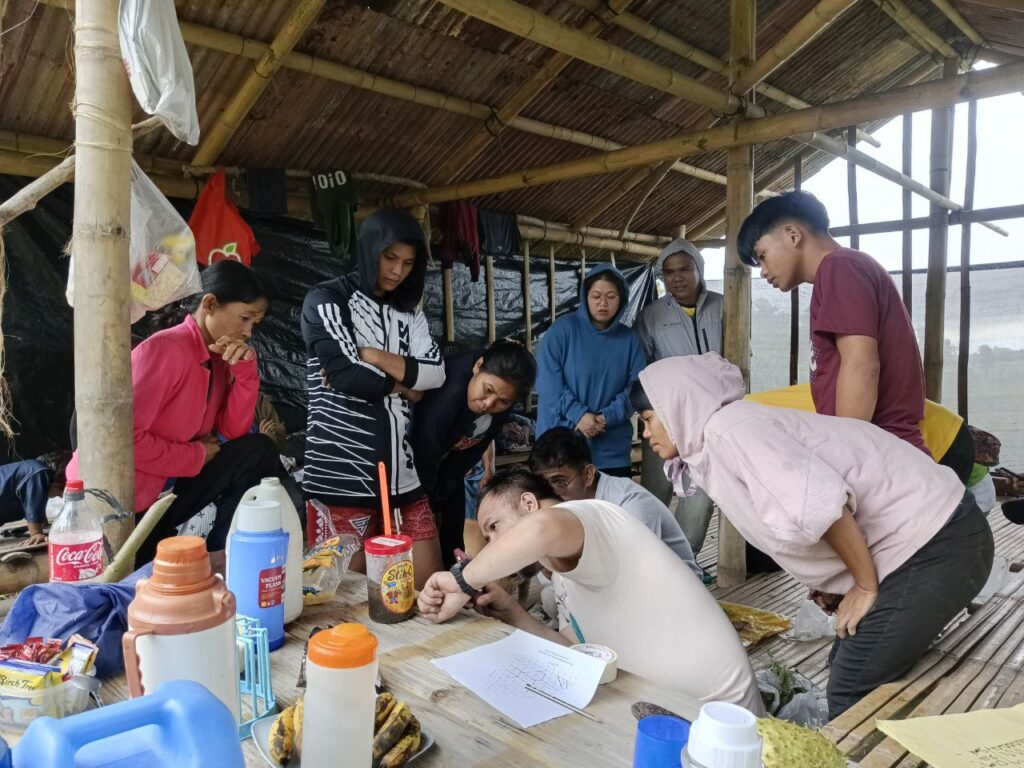
Citizen science in action. LFA members are mixing soil samples in vials as part of Soil chemical analysis, specifically for Phosphorus content. Photo by MASIPAG Mindanao.

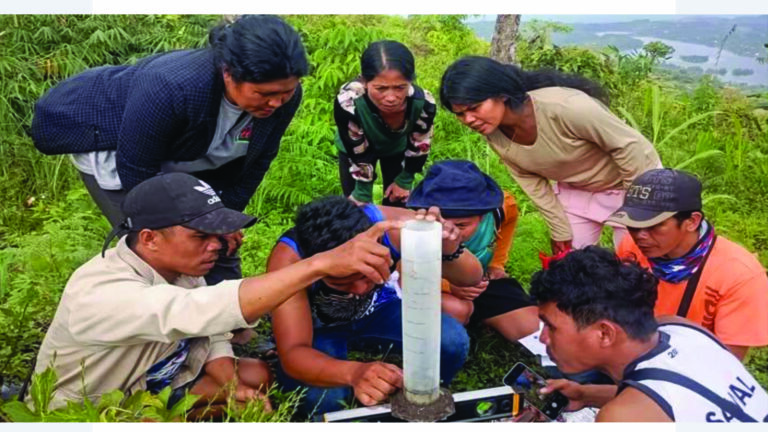
Rainfall data was also gathered weekly using improvised rain buckets, enabling farmers to directly correlate rainfall intensity with soil erosion patterns.

This participatory approach empowered farmers to become both researchers and decision-makers, strengthening their understanding of farming impacts.By democratizing science, farmers engage directly in the process of observation, experimentation, and innovation. This approach grounds scientific inquiry in the realities of local farming systems, emphasizing community learning and shared experience rather than dependence on external, corporate-controlled research.

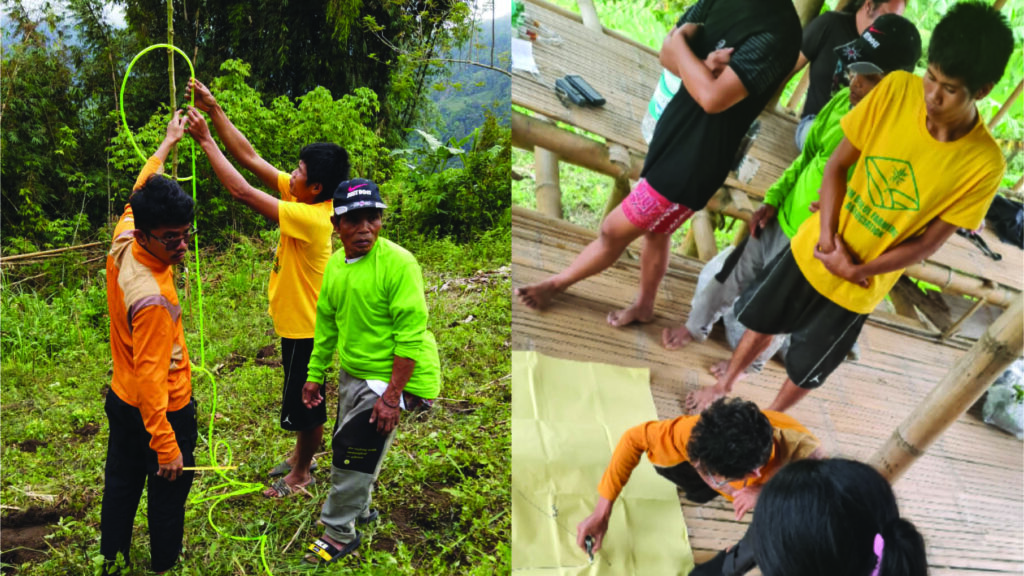
Left photo: Slope measurement conducted using water level hose. Right photo: Engr. Carlo Haictin, explaining how to compute the slope angle using Pythagorean Theorem. Photo by MASIPAG Mindanao.

Evidence from the Soil

After one corn cropping season from March to July 2025, the results were striking, showing that the soil erosion was 5.14 times higher in farms using genetically modified (GM) corn varieties and glyphosate compared to traditional farming practices:

  • Traditional farms lost 7.59 cubic meters of soil per hectare.
  • Conventional farms lost 39 cubic meters of soil per hectare.

To help farmers visualize the findings, researchers constructed straw rope boxes representing soil loss volume. The dramatic difference shocked many farmers and community members, making the invisible loss of soil visibly real.

Social and Health Impacts

During community consultations, farmers described emerging health concerns linked to chemical exposure. Residents reported increased cases of high blood pressure, thyroid disorders, tuberculosis, viral infections, and cancer. Skin irritation and dryness were also observed immediately after herbicide spraying.

Additionally, chemical farming disrupted traditional food systems. Many indigenous farmers abandoned native rice varieties, resulting in reduced genetic diversity and weakening food security in the community.

Interpreting the Findings

The study supports the hypothesis that glyphosate-based corn farming contributes to higher soil erosion. The reduction in plant cover and soil organisms appears to weaken soil structure, making it more susceptible to erosion, especially on steep upland slopes. Scientists have recently reported the development of glyphosate-resistant weeds and glyphosate has been found to be toxic to some non-target beneficial organisms, such as spiders, mites, carabids, coccinellid beetles, earthworms, and aquatic organisms, including fish.

Economically, the reliance on purchased seeds and chemical inputs increases farmers’ financial vulnerability. Environmentally, soil loss threatens long-term productivity, potentially trapping farmers in a cycle of declining yields and increasing costs.

Socially, the decline in traditional crops and increased health concerns suggests that agricultural modernization can have unintended community-level consequences.

The findings highlight the need for stronger government monitoring of herbicide use and GM crop deployment. Current pesticide regulations remain weak, limiting protection for farming communities and ecosystems.

The research also demonstrates the effectiveness of citizen science as a tool for policy advocacy. By directly involving farmers in data collection and analysis, the study increased community awareness and strengthened calls for sustainable agricultural policies.

By democratizing science, peasant science emerges—science done by and for the farmers and the people. Peasant science transforms the purpose of research from serving external interests to advancing farmers’ own well-being. Through collective experimentation and technology innovation, MASIPAG demonstrates how knowledge can be reclaimed as a tool for empowerment and sustainable development.

The Soil as a Silent Witness

The experience of Sitio Tenetem reveals a powerful lesson: agricultural technologies that promise short-term productivity gains may carry hidden long-term costs.

For Mang Ramel and Mang Loreno, the soil beneath their feet became more than farmland—it became evidence. One farm retained its fertility and biodiversity, while the other showed visible signs of degradation.

As the community continues to debate farming practices, the central question remains: how can progress be balanced with sustainability?

The story of Lake Sebu reminds policymakers, scientists, and farmers alike that protecting soil is not only an environmental concern but a matter of economic survival, cultural preservation, and community health.

The author of the article is Leo XL Fuentes, Regional Coordinator, MASIPAG Mindanao.

MASIPAG is a farmer-led network of people’s organizations, NGOs, and scientists working towards the sustainable use and management of biodiversity through farmers’ control of genetic and biological resources, agricultural production, and associated knowledge.