The Swedish International Agricultural Network Initiative (SIANI) publishes the Mid-Term Review of Phase 4 (2022–2027). The review provides an independent assessment of SIANI’s relevance, effectiveness, coherence and sustainability, and offers recommendations to strengthen the network’s work during the remainder of the programme period.
At SIANI, sharing evaluation results is an important part of transparency, learning and knowledge exchange. By making this review publicly available, we aim to contribute to dialogue on how collaborative networks can support sustainable food systems transformation.
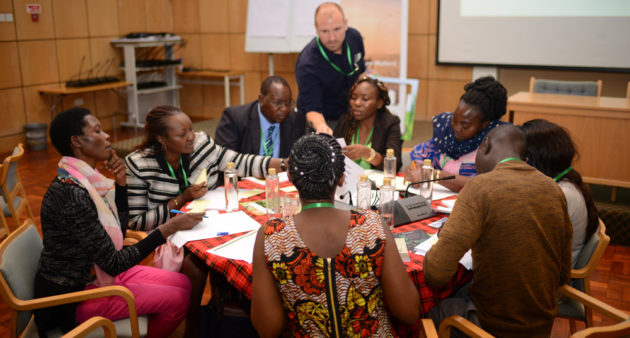
The review, conducted between June and November 2025 by an external evaluation team, draws on document analysis, 31 key informant interviews, an online survey with 113 respondents, and participatory workshops. It assesses SIANI’s progress against its Theory of Change, its alignment with global and Swedish priorities, and its contribution to knowledge sharing and dialogue on sustainable food systems.
A valued platform for dialogue
Overall, the Mid-Term Review finds that SIANI remains highly relevant as a neutral, multi-sector platform that connects research, policy, and practice in sustainable food systems.
Stakeholders consistently highlighted SIANI’s convening power, bringing together actors from academia, government, civil society and the private sector who might otherwise work in isolation. The network’s role in connecting Swedish expertise with global food systems discussions was also recognised as an important contribution.
The review confirms that SIANI’s work aligns strongly with global agendas such as Agenda 2030, particularly the Sustainable Development Goals related to food security, sustainable agriculture, climate action and biodiversity. However, the evaluation notes that the alignment with Sweden’s latest reform agenda and future development strategies could be further clarified.
The evaluation concludes that SIANI is effective in delivering its planned outputs, including events, knowledge products and engagement initiatives.
SIANI’s Expert Groups are highlighted as a key strength of the network. They generate thematic knowledge, support collaboration among experts and practitioners, and contribute to dialogue on policy and practice. On the other hand, the review notes that the performance of expert groups varies and that stronger links between their work and policy influence could further enhance impact.
The evaluation also recognises improvements in SIANI’s Monitoring, Evaluation and Learning (MEL) system since the 2021 evaluation. The current framework provides clearer indicators and supports learning and adaptation within the programme. However, the review suggests that the MEL system could play a stronger role in informing strategic decision-making.
Areas for improvement
While the overall assessment is positive, the review identifies several areas where SIANI could further strengthen its work.
These include improving the visibility and accessibility of knowledge outputs, deepening engagement with key target groups such as youth from the Global South, and clarifying the network’s membership structure. Currently, membership is largely defined by newsletter subscriptions, making it difficult to distinguish between active and passive members.
Key recommendations
The Mid-Term Review provides several recommendations to support SIANI in the remaining years of Phase 4, including:
- Clarifying SIANI’s contributions at Swedish, regional and global levels
- Developing a long-term funding and resource mobilisation strategy
- Strengthening succession planning and institutional continuity
- Streamlining the Monitoring, Evaluation and Learning system to focus on strategic goals
- Deepening engagement with key target groups, particularly youth
- Clarifying membership structures and engagement opportunities
- Improving the visibility and accessibility of SIANI’s knowledge products
- Learning for the future
The Mid-Term Review concludes that SIANI continues to be a legitimate and valued actor in food systems transformation, with strong credibility as a platform for dialogue and collaboration. By sharing the findings of this evaluation, SIANI hopes to support ongoing reflection and improvement within the network and across the wider community working to advance sustainable, inclusive and resilient food systems.
The full Mid-Term Review and a summary of key findings is available Final report_SIANI MTR_final version.