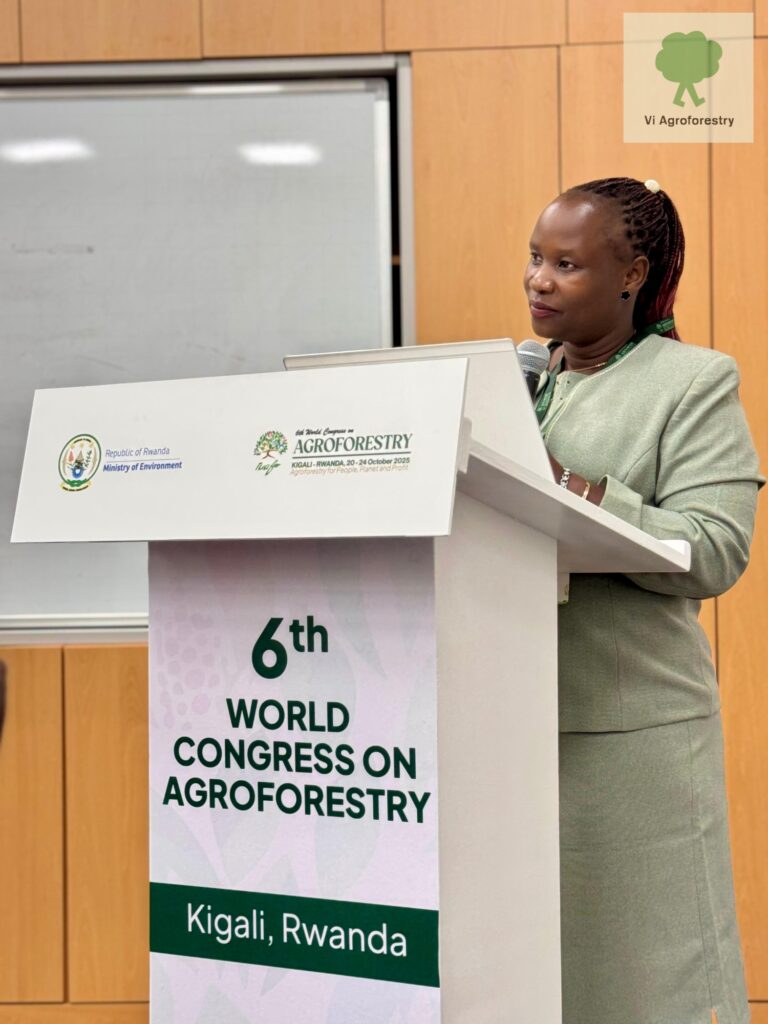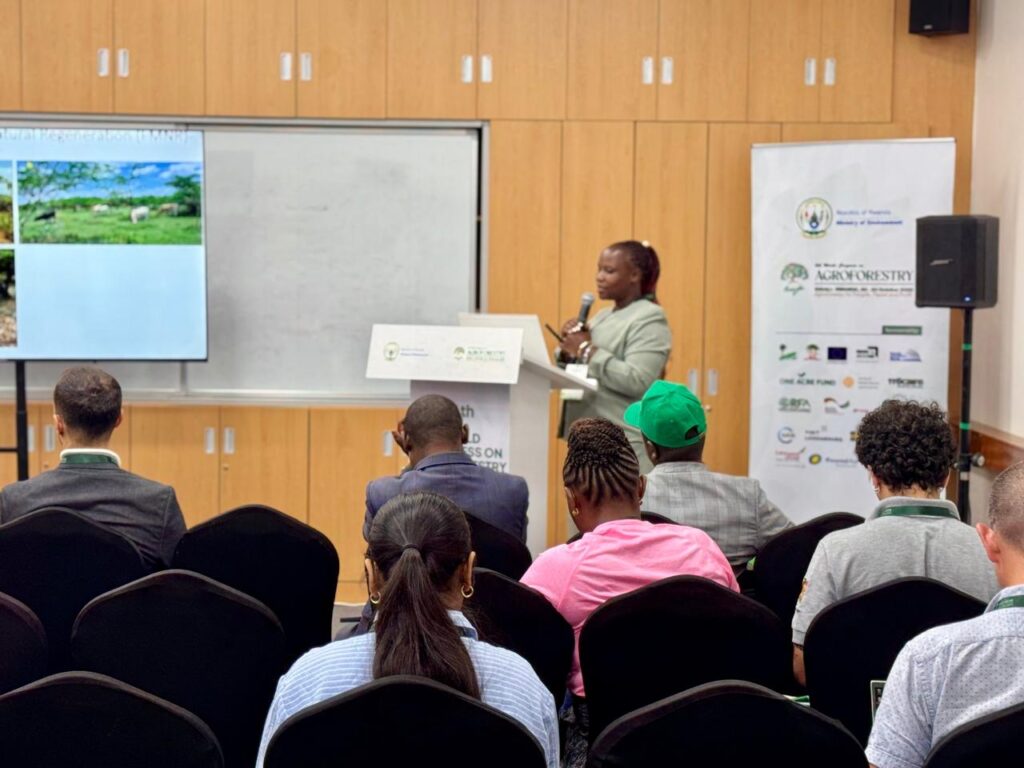
Today at the 6th World Congress on Agroforestry in Kigali, Vi Agroforestry takes pride in spotlighting one of our driving messages for the region: Agroforestry for Sustainable Livelihoods. At the heart of this was the presentation by Sarah Kezia titled “Climate-Resilient Agroforestry Systems for Drylands: Pathways to Adaptation and Sustainability in East Africa.”
Setting the Scene
Dryland regions across East Africa face escalating climate pressures: erratic rainfall, soil degradation, shrinking pasture and grazing lands, and growing vulnerability for smallholder farmers. Against this backdrop, the partnership between Vi Agroforestry and the Swedish International Agricultural Network Initiative (SIANI) through the East Africa Dryland Agroforestry Expert Group is responding with urgency. (Vi Agroforestry)
Within this framework, Sarah Kezia’s session marked a key moment, creating a direct link between evidence, practice and policy. It aligned with the Expert Group’s aim to boost understanding of dryland agroforestry, promote farmer-led innovation, and influence national and regional frameworks. (Vi Agroforestry)
Key Themes and Highlights
Sarah Kezia emphasised how agroforestry, the integration of trees alongside crops and livestock, can restore degraded drylands while securing livelihoods and linking to climate action.
She underscored real-world examples from East Africa where tree-based systems have strengthened soil health, improved water retention, diversified incomes and empowered both women and youth.
Engaging with the audience, she posed a question that resonated: “How can we make dryland agroforestry systems more inclusive and scalable?”
“Agroforestry is one of the most practical solutions to climate challenges in drylands. When we work with nature, we create systems that last.”