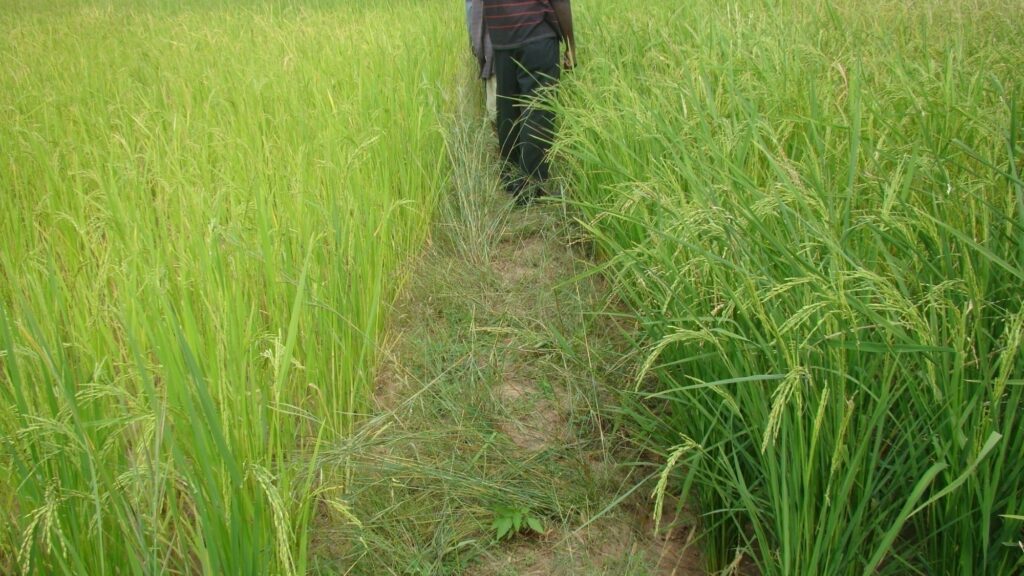
In an effort to increase agricultural yields, Burkina Faso has piloted the recycling of human excreta and wastewater in various initiatives over the past 20 years. A new report and policy brief from SIANI expert group One Health in Burkina Faso bring together research findings, field experience and insights on the legal frameworks shaping resource recovery and reuse of sanitation by-products in the country. The successes and “hard lessons” emerging from Burkina Faso’s experience could be of interest to other regions.
Two of Burkina Faso’s greatest challenges are growing food insecurity and serious health threats due to a lack of clean water and safe sanitation. Yet solutions exist to address both problems simultaneously, and Burkina Faso has become a pioneer in testing them. A new report and policy brief from the SIANI expert group One Health in Burkina Faso explore these projects to see what can be learned from them.
Worsening food insecurity
Food insecurity in Burkina Faso has been growing for the past few years as the country is facing a multidimensional crisis. Widespread violence, chronic vulnerability to the impacts of climate change and poor yields make life especially precarious for small-scale farmers and people in the countryside. The health situation is aggravated by the fact that only 23% of the population in rural areas have access to basic sanitation infrastructure.
Farmers also struggle with soil degradation and a lack of fertilizers. Nearly one-third of Burkina Faso’s farmland is already degraded, and the problem looks set to get worse as the climate crisis escalates and the population continues to grow. Like most agricultural systems in sub-Saharan Africa, Burkina Faso’s agricultural land chronically suffers from nutrient imbalances—particularly in nitrogen, phosphorus, and potassium.
Recycling of human and animal waste
Many of the nutrients lacking in the soil can however be retrieved from human excreta if it is managed safely and responsibly. To test this, Burkina Faso has since 2002 constructed over 13,000 so called Ecosan latrines in more than 30 initiatives. Through this form of ecological sanitation, urine and excreta can be treated and used as fertilisers in agriculture.
The roll-out of ecological sanitation has, however, not been without its challenges, and the Ecosan concept has occasionally been seen as too inflexible to work everywhere. Ecosan initiatives have also been limited to the risks and resources related to human excreta. A recent development is the Clean and Green Village framework, piloted in Burkina Faso together by the Stockholm Environment Institute, Eau-Vive International and Water Aid Burkina Faso. The Clean and Green Village framework allows technical flexibility and addresses a wider range of both risks and resources in the local environment – including the safe recycling of human and animal excreta, greywater, organic residues and wood ash.
Lessons from Burkina Faso
Burkina Faso may be the first place in the world where agricultural funding has been used to invest in water, sanitation and hygiene (WaSH) as a means to strengthen agricultural, production.
The SIANI expert group One Health in Burkina Faso undertook a stock-taking of existing research, field experience and policy developments to identify key lessons. Overall, the findings show that productive sanitation has contributed to improved agricultural productivity in many cases and has generally been well received. Farmers interviewed as part of different initiatives highlighted the practical benefits and found the approach useful.
For this type of activities to be sustainable in the long term, they must however be integrated into national policies and carried out within an enabling environment. The policy brief presents a range of recommendations to achieve this, for example:
- Invest in training and awareness raising.
- Establish clear standards, guidelines and regulations.
- Encourage research and development.
- Foster collaboration and partnerships.
- Create financial incentives.
Both the policy brief Enhancing agricultural productivity through the safe reuse of wastewater and excreta and the report Improving agricultural productivity in Burkina Faso can be found on the SIANI website.