
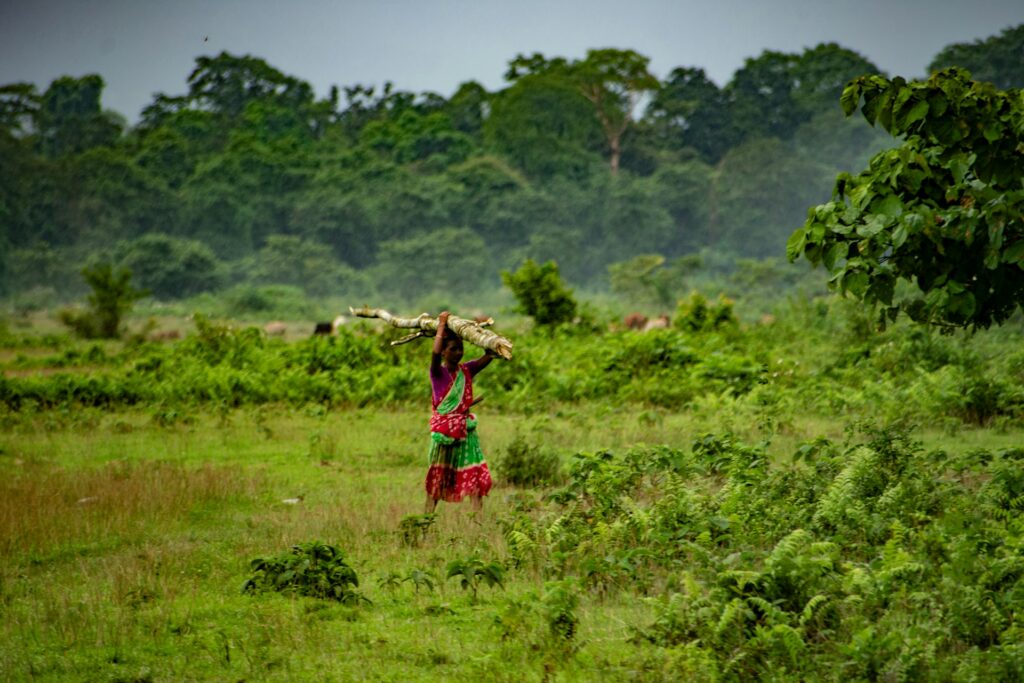
As climate change, deforestation and water scarcity intensify, there is a need for a more inclusive and integrated approach to managing ecosystems and water resources. In the past two decades, the annual amount of available freshwater resources per person has decreased by 20%, and 3.2 billion people live in agricultural areas with high to very high levels of water shortages or scarcity. The analysis document Taking Stock of Gender Equality Progress in the Water Domain shows that without gender-responsive policies and cross-sectoral planning, efforts to restore landscapes and safeguard water resources risk falling short.
The 2025 policy brief by UN Women Mainstreaming gender equality in water resources management: Global status and 7 pathways to progress warns that progress in integrating gender considerations into water governance remains slow and uneven. While many countries have adopted gender-sensitive policies, implementation often declines due to limited funding, weak monitoring systems and the persistent underrepresentation of women in water-related decision-making and technical roles. Globally, gender mainstreaming in water management currently averages about 58 percent in 2023, and only 27 percent of countries report mostly achieving gender objectives in their national water management frameworks.
Gender equality as a cornerstone of water governance
Meanwhile women, due to their domestic, childcare and reproductive are disproportionally affected by poor water access and management systems responsibilities. In some instances, this imbalance increases their time burden and physical effort for accessing water from far away, unreliable, or unsafe sources. This in turn limits their economic capacity to engage in paid work and educational opportunities. Despite women’s roles in managing household water resources and natural landscapes, they remain still underrepresented in water governance institutions. In this context, the International Forum “Women and Water” recognised that “traditional gender roles, limited access to resources, and unsupportive policies” continue to perpetuate women’s marginalisation and undermine progress towards inclusive and effective water management.
The UN Women policy brief outlines seven key pathways to accelerate progress; embedding these measures within integrated water resource management frameworks can help ensure that water policies are more equitable, inclusive and sustainable.
The forest–water nexus
At the same time, water governance cannot be separated from ecosystem management. Forest ecosystems play a critical role in regulating water flows, improving water quality and supporting climate regulation that sustain agriculture and improve resilience, according to the FAO publication Climate and Ecosystem Services benefits of Forest and Trees for Agriculture. Forest and trees play a vital role in maintaining and improving the quality of the water flowing into human settlements and irrigation systems. Forested landscapes act as a natural infrastructure for water purification. Forest ecosystems can buffer against water pollution by absorbing nutrients, trapping sediments and reducing the transport of chemical pollutants.
However, human activities such as deforestation, land degradation and unsustainable agriculture are increasingly disrupting these water-related ecosystem services and the resilience of forests is also under threat. Changes in forest cover can alter precipitation patterns, reduce infiltration and groundwater recharge, and increase risks of floods, droughts and water pollution. Therefore, these disruptions not only threaten water systems but also affect biodiversity and undermine food production, energy systems and economic development.
Water-smart forest and landscape restoration
To address these challenges, the Stockholm International Water Institute developed the Water-smart Forest and Landscape Restoration (W-FLR) Tool to bridge the gap between forest restoration initiatives and integrated water resource management by embedding hydrological considerations into restoration planning.
FLR initiatives seek to restore degraded land while balancing social, environmental and economic objectives. Yet many restoration projects have historically overlooked hydrological processes, leading to unintended consequences—for example, the hydrologic implications of tree restoration or the potential conflicts that may arise with existing or future water uses.
The W-FLR approach seeks to prevent such outcomes by guiding policymakers and planners through participatory assessments of water risks and opportunities in restoration landscapes. The goal is to regain ecological functionality and enhance human well-being in deforested or degraded forest landscapes.
The tool helps identify ecosystem services, stakeholders and priority actions needed to make restoration efforts sustainable over the long term. FLR interventions must therefore recognize and manage the complex interconnections between people, nature and water, particularly in landscapes where productive land uses compete with environmental and biodiversity goals.
Landscape approaches that involve forestry, agriculture and local communities require inclusive governance to ensure that the needs and knowledge of all stakeholders, especially women and rural and Indigenous communities, are reflected in decision-making.
A human-rights-based approach to restoration, increasingly promoted in international environmental initiatives, emphasizes participation, non-discrimination, transparency and accountability. These principles help ensure that restoration interventions not only restore ecosystems but also strengthen social equity and resilience which can in turn accelerate restoration and future conservation efforts.
A systems approach for climate goals
The growing recognition of the forest–water nexus highlights the need for coordinated action across sectors. Forest restoration can contribute to climate mitigation, biodiversity conservation and water security, but only if hydrological dynamics and social dimensions, including gender equality, are integrated into planning and governance (SIWI W-FLR Tool; FAO & UN Women, 2025).
With the world approaching the 2030 deadline for achieving the Sustainable Development Goals, international organisations and researchers are calling for attention to integrated solutions, warning that bridging gaps between water governance, ecosystem restoration and gender equality is increasingly urgent. Aligning gender-responsive water governance with ecosystem-based restoration initiatives such as water-smart FLR could help leverage synergies across different land use environmental and socio-economic domains and contribute to delivering multiple benefits: healthier landscapes, more resilient communities and more equitable management of water resources.