
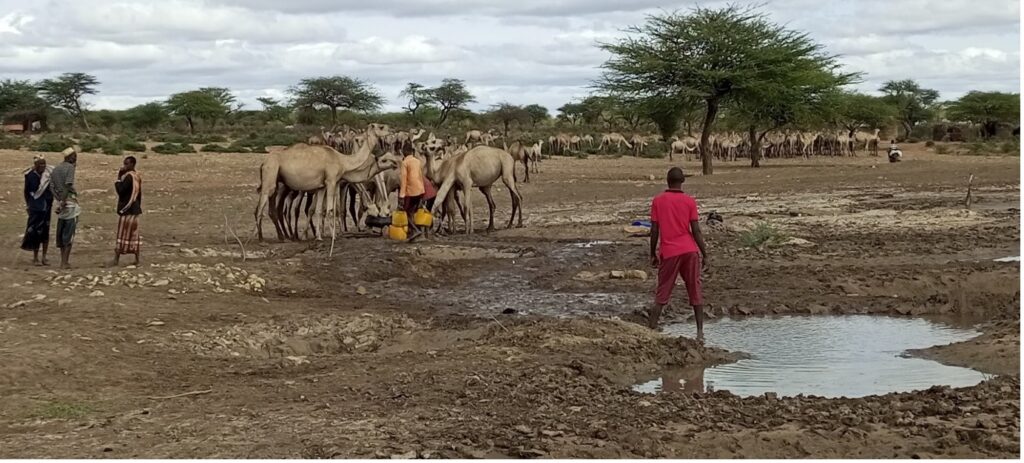
The United Nations Convention to Combat Desertification (UNCCD) COP16 decision (Decision 29/COP.16) encourages countries to enhance policies and investments aimed at conserving, restoring, and sustainably managing rangelands, in alignment with Land Degradation Neutrality (LDN) targets and other global objectives.
In response to this decision, and in the context of the International Year of Rangelands and Pastoralists (IYRP) , the Food and Agriculture Organization of the United Nations, in collaboration with the World Food Forum Youth Assembly, the UNCCD Youth Caucus, the IYRP youth working group, and other partners, is conducting a global survey (deadline to respond: 17th of April, 2026 ). This survey aims to capture the perspectives, priorities, and experiences of young pastoralists and youth working with pastoral and rangeland communities.
As pastoralist communities face numerous challenges that threaten their sustainability, engaging youth in rangeland management is becoming increasingly important.
The survey seeks to collect youth-generated evidence on various topics, including rangeland conditions, land governance, mobility, the impacts of climate change and drought, and livelihood opportunities. It will identify key challenges and solutions for sustainable pastoral systems from the perspectives of young women and youth, ultimately informing youth-led policy recommendations for sustainable rangeland management.
The results will contribute to the development of a youth policy brief on pastoralism and sustainable rangeland management, which is expected to inform discussions at UNCCD COP17 and contribute to knowledge products and reporting processes linked to the IYRP.
The survey will also examine existing cases and examples of how youth participation in pastoralism and rangeland management can lead to more sustainable practices. Young pastoralists often bring innovative approaches to traditional systems by integrating modern technologies with indigenous knowledge.
Rangelands provide diverse opportunities for youth beyond traditional herding, including agribusiness ventures, ecotourism, and social protection initiatives. These opportunities enable young people to generate income, create jobs, and contribute to local and national economies.
By recognizing and valuing the contributions of young pastoralists, we can explore innovative ideas and unlock the potential of rangelands in promoting sustainable development.