Skip to content
Start of page content below the header
Blog Post
30 March 2026
Author: Linus Dagerskog

Sanitation, soil and food security: insights from 20 years of productive sanitation in Burkina Faso

Photo by: Linus Dagerskog / SEI

Over the past two decades, I have had the privilege of working with Burkinabè partners who recognized the connection between farming, soil nutrients and sanitation. They set out to turn a sanitation challenge into an agricultural opportunity, through ecological sanitation, also known as ecosan or productive sanitation.

This effort is the basis of productive sanitation: recover and reuse the nutrients, water and organic matter that enter sanitation systems. Instead of losing these resources, reusing them strengthens farming systems, while protecting both the environment and public health.

In my work over the past two decades I have followed closely how productive sanitation has evolved in Burkina Faso. Drawing on this experience and a recent SIANI report, here are my reflections on the development of productive sanitation in Burkina Faso and its potential contribution to rural livelihoods.

A context where nutrients are scarce

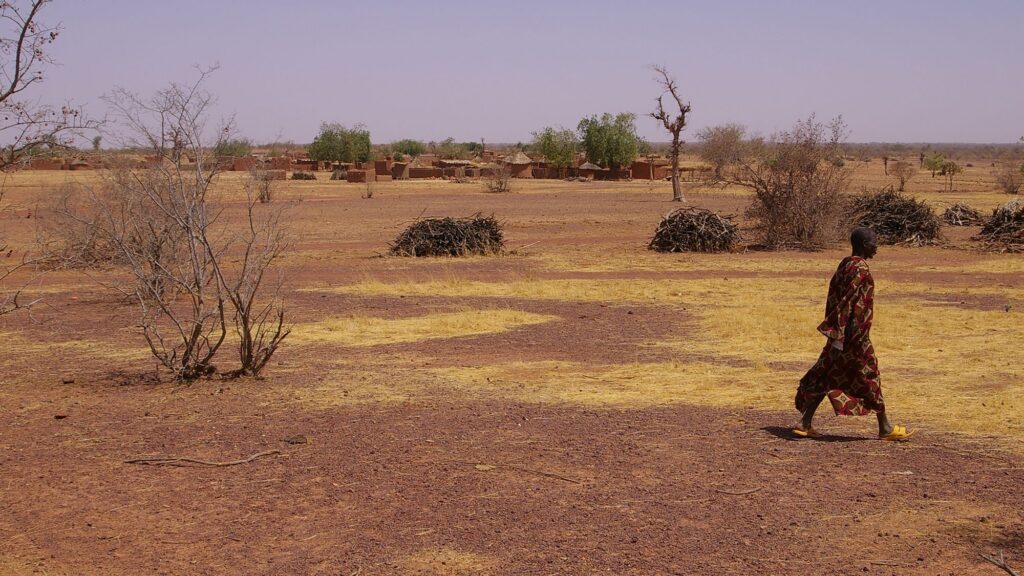
Burkina Faso faces rising pressures on land and food production from a rapidly growing population, soaring temperatures and increasingly erratic rainfall. Roughly 31% of arable land is degraded, local soils are low in organic matter, and fertilizer prices have repeatedly spiked in the wake of global crises. At the same time, among Burkina Faso’s almost 16 million rural inhabitants – primarily smallholder farmers – 42% lack any access to sanitation, and only 24% have a toilet that meets basic hygienic standards.

From a nutrient perspective, human excreta reflects dietary intake – “what we eat is what we excrete”. Each Burkinabè “produces” on average the equivalent of 15 kg of “mineral fertilizer” per year, that generally get lost in sanitation systems even though they are urgently needed for their fields.

An average rural household of nearly six people therefore excretes the equivalent of roughly 90 kg of chemical fertilizer each year — often more than many households can afford to buy. Urine contains most of the plant-available macronutrients, particularly nitrogen (N) and potassium (K). Faeces contain most of the organic matter and a large share of micronutrients such as calcium, magnesium, zinc and iron. Phosphorus (P) is more evenly distributed between urine and faeces. At the national scale, this represents CFA 100–221 billion (~USD 175–390 million) of nutrient value annually, when compared to the cost of commercial fertilizers containing the same amounts of N, P and K.

The first structured productive sanitation efforts to recover these resources in Burkina Faso began in 2002. That year, the Regional Centre for Low Cost Water and Sanitation (CREPA), headquartered in Ouagadougou, launched a long-term ecological sanitation program combining capacity building, action research and demonstration projects across 10 West African countries. The program focused on sanitation systems designed for resource recovery and reuse, such as double-vault urine-diverting dry toilets (UDDTs). Financially supported by Sida, the Swedish International Development Cooperation Agency, and implemented through teams of local agronomists, technicians, sociologists and community facilitators, CREPA’s program quickly gained momentum in the region – and particularly in Burkina Faso.
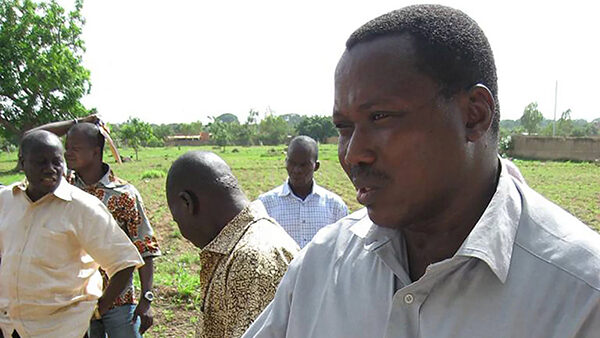
Dr. Moussa Bonzi, an agronomist and soil fertility expert at the National Institute of Environmental and Agricultural Research (INERA).

Photo by: Linus Dagerskog / SEI.

While I was working in Burkina Faso in 2006 to 2010, I saw firsthand how Moussa Bonzi, an agronomist and soil fertility expert at the National Institute of Environmental and Agricultural Research (INERA), played a decisive role in scaling productive sanitation from the small pilots of the Sida-financed program to larger rural initiatives. His research and leadership enabled CREPA and INERA to mobilize EU food-security funds to finance productive sanitation in dozens of villages. In tandem with sanitation and hygiene promotion, the projects centred around farmer field schools, where farmers learned the practicalities of safe reuse (doses, methods, safety measures, etc.) as well as much needed soil and water conservation techniques.

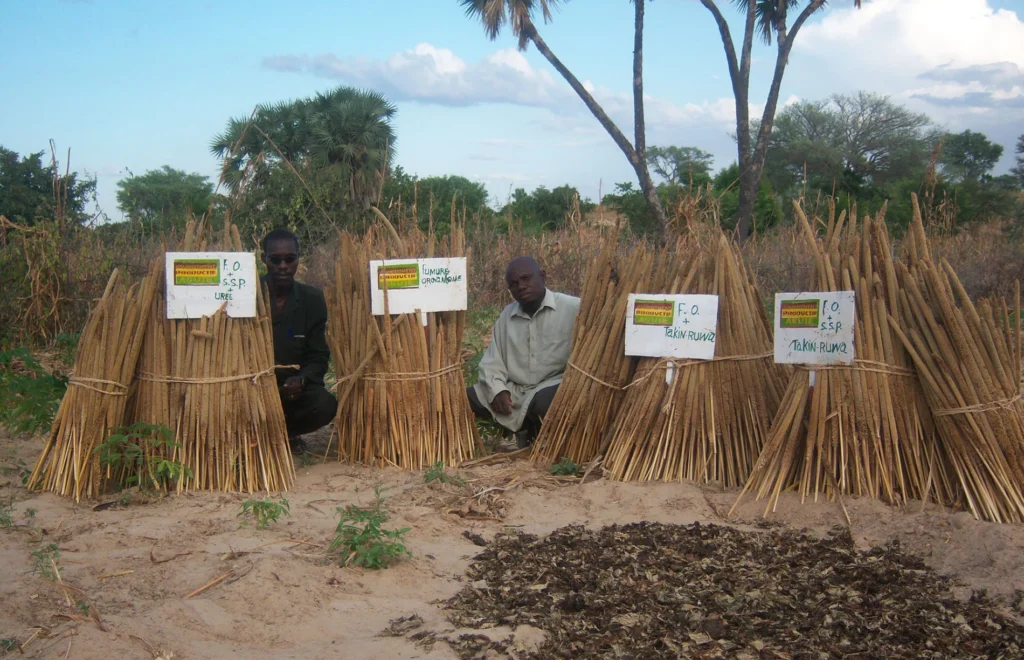
In parallel, Bonzi also led controlled reuse trials at INERA to build the necessary evidence base in Burkina Faso. These field experiments showed that “hygienized” urine and faeces could match – and in some cases outperform – urea and standard NPK fertilizer for both grains and vegetables.

By 2012, Burkina Faso had 20 projects that constructed more than 12 800 UDDTs. Communities responded particularly well where toilets were paired with farmer field schools, enabling farmers to experiment directly with urine and composted faeces. As one farmer explained: “I harvest more when using these by-products — that’s why I continue.

Millet trials.

Photo by: Linus Dagerskog / SEI.

From early enthusiasm to hard lessons

But the rapid expansion also exposed weaknesses. As later learning initiatives documented, many projects focused too heavily on toilet construction, with insufficient attention to

  • in-depth engagement of agricultural expertise (beyond a brief training session)
  • urine storage and handling challenges
  • gendered constraints (particularly women’s discomfort using UDDTs during menstruation)
  • maintenance and repair
  • institutional capacity to sustain programs after external support ended.

When funding began to decline after 2012 – compounded by organizational upheaval at CREPA and the tragic loss of Bonzi, who died in 2015 – the productive sanitation movement in Burkina Faso stalled. Many toilets remained, but the enabling institutions did not.

As part of an SEI research project on the sustainability of productive sanitation, hundreds of households were revisited in 2016, three to eight years after project completion in three larger initiatives. Encouragingly, 70–90% of toilets were still in use, but reuse practices were uneven and closely tied to the level of agricultural support that these households had received. The lesson was clear: productive sanitation succeeds only when sanitation and agriculture advance together.

Smaller initiatives keep recycling going

Since 2012, the landscape has shifted toward smaller, locally rooted initiatives. These initiatives have been carried out in particular by the Association Koassanga, a non-governmental organization (NGO) supported by French decentralized cooperation, and by Swedish contributors through the NGO Toilets Without Borders (TWB).

I co-founded TWB in 2008, when I was working as a technical assistant at CREPA and had the chance to collaborate closely with Bonzi. The idea was to enable Swedish individuals and companies to co-finance toilets in existing productive sanitation projects, where household demand exceeded the local funds available.

In Burkina Faso, TWB has supported over 200 household toilets in places like Tengrela, Dapélogo, Ziniaré and other rural, agricultural locations. These projects combine sanitation with reuse training and composting techniques. Interested households need to participate in one full season of reuse training before receiving support for a UDDT, ensuring that lack of reuse skills does not become a barrier to sustained toilet use.

This work has continued over the past decade despite immense upheaval in Burkina Faso. More than two million people have been internally displaced and insecurity has spread across much of the country, due to conflict driven by extremist groups. Association Koassanga has used productive sanitation as a constructive tool to ameliorate the effects of the conflict. Their efforts have helped to rebuild strained relations between farmers and herders, restoring food production and supporting herders. In Partiaga, by pairing toilets with training in reuse and agricultural techniques – as well as livestock management and fodder production – a first initiative in 2022 helped 92 displaced people return to their land and contributed to improved safety in several villages.

What the policy landscape tells us

Today, Burkina Faso’s sanitation policies recognize the importance of resource recovery quite clearly. The 2016 National Sanitation Program for Wastewater and Excreta (PN-AEUE) explicitly promotes the optimization of excreta reuse, and a 2023 decree was adopted that regulates the full on-site sanitation chain. Yet major gaps remain:

  • Agricultural policies still prioritize mineral fertilizers and do not mention productive sanitation.
  • No certification system or official guidelines exist for sanitation-derived fertilizers.
  • Extension services rarely include training on reuse.
  • Coordination between water, sanitation and hygiene (WaSH) and agricultural sectors remains limited.

Without bridging these gaps, created by institutional divides, lack of capacity and other barriers, then even the most promising rural initiatives will struggle to scale up productive sanitation and other measures.

A new generation of approaches: Clean and Green

To respond to both the successes and shortcomings of the past, SEI and WaterAid Burkina Faso have developed the Clean and Green framework. This holistic approach addresses both a wider range of risks and resources in the local environment.

Rather than promoting a single toilet technology, Clean and Green helps communities manage all major waste flows (often human and animal excreta, household organics, ash, and greywater), and strengthens both public health (“Clean”) and agricultural productivity (“Green”).

Early pilots in three villages show strong engagement: communities appreciate the dual focus on hygiene and farming. They also like the flexibility to choose between different technologies, whether improved pit latrines complemented with urinals or full UDDTs based on local needs and capacities. This experience led to the definition of the seven step Clean and Green implementation process, recently updated with accompanying tools and other resources.

Clean and Green also aligns better with Burkina Faso’s national sanitation strategy, which emphasizes the importance of communities achieving opening defecation free (ODF) status. Once certified as ODF, a community could raise its ambition to become a Clean and Green village as a second step to further reduce health risks and enhance resource circularity.

Looking forward

After 20 years of working in Burkina Faso, I can say that the country’s experience with productive sanitation is neither a linear success story nor a failed experiment. A consistent lesson emerges from this history: productive sanitation only takes root when it connects meaningfully to farmers’ priorities — improving soils, reducing costs, and supporting more reliable harvests. When this link is strong, households continue to use and reuse; when it is weak, facilities risk falling out of use.

Strengthening agricultural training and applying more holistic approaches such as Clean and Green could help consolidate the gains made so far. Burkina Faso has demonstrated that productive sanitation can work at scale. The challenge ahead is integrating these experiences into national policies and support systems that can sustain them over time.

This story was originally published in SEI.org on 24 March 2026 and is reproduced here with permission.