Skip to content
Start of page content below the header
News Story
11 May 2026

The Soil Remembers: Esther’s Journey Toward Resilience in Nigeria

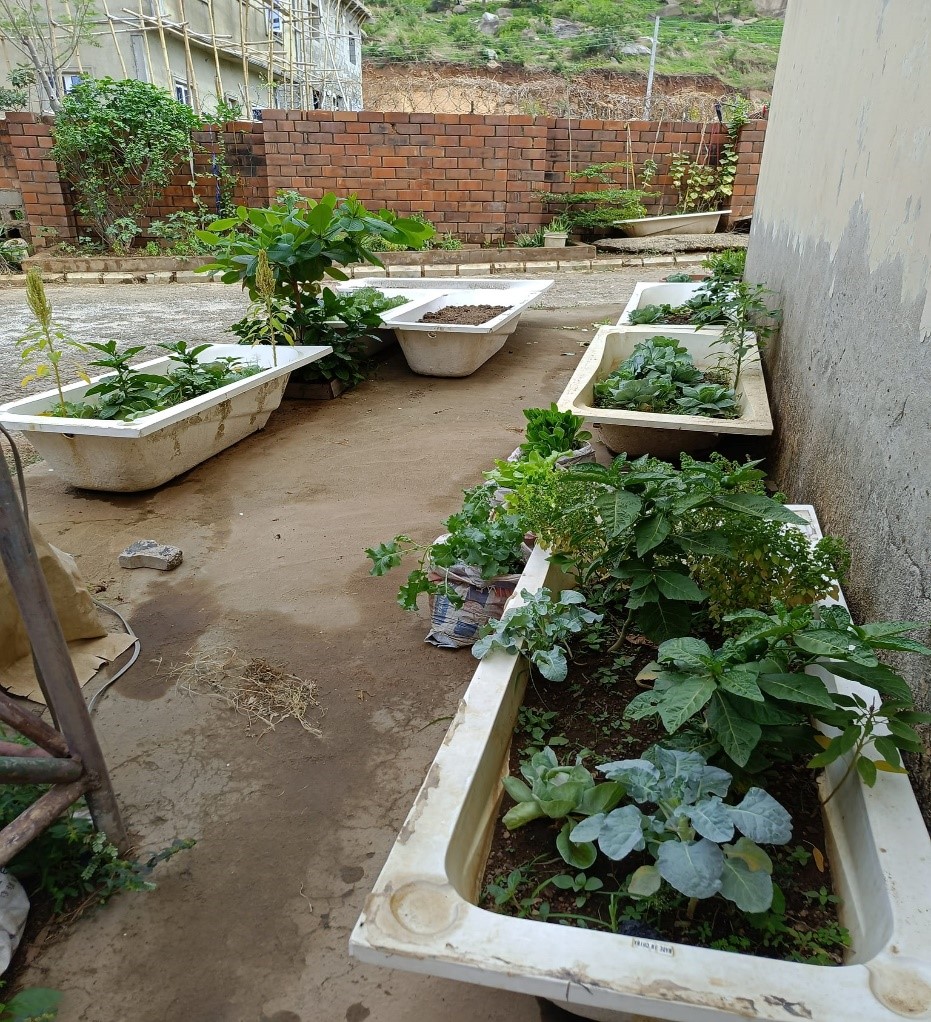
Raised container beds used for small scale vegetable and herb farming.

Photo by Esther Debel.

This interview is part of SIANI’s ‘Tune in to Food Systems’ interview series composed of interview articles with experts across fields dedicated to sustainable food systems.

Esther is a small-scale farmer in North-central Nigeria who practices mixed cropping  for subsistence  and local sales. By producing her own feed,recycling farm inputs and minimizing waste, She contributes to sustainable food systems while supporting her family.

In north-central Nigeria, where erratic rainfall and rising input costs shape daily decisions, smallholder farmers are building the foundations of climate resilience; often led in practice by women managing diverse, resource-constrained farms. Esther cultivates a leased plot near her home. Her farmland combines sweet potatoes, yams, groundnuts and maize, a mixed-cropping system that spreads risk, nourishes the soil and ensures year-round food availability for her household and local markets. Whatever she harvests beyond her household needs becomes an important source of fresh produce for nearby markets.

“If one crop fails, another will survive,” she says. “That is how we farm here.”

Like many women farmers who often face constraints in land tenure, access to credit, and agricultural inputs, Esther faces structural barriers that limit her potential. These challenges are well-documented in FAO’s The Status of Women in Agrifood Systems (2023), which highlights that in 40 of 46 countries, men have greater ownership or secure tenure rights over agricultural land than women, and that legal protections for women’s land rights remain low in half of reporting countries. Yet Esther continues to innovate.

By turning crop residues into homemade feed and integrating goats and chickens into her cropping system, she has created a circular, low-input model that closes the loop, reduces costs, and improves soil fertility.

“Feed is too expensive now, so I make my own,” she explains. “Nothing on the farm should go to waste.” 

Chickens feeding at Esther’s farm, supporting local nutrition and livelihoods.

Photo by Esther Debel.

Freshly harvested sweet potatoes.

Photo by Esther Debel.

FAO’s 2023 analysis shows that women farmers like Esther often innovate under constraint, producing simultaneously for their households and local markets in ways that strengthen food security and rural economies.  Recent research further demonstrates that such small‑scale, women‑led farming systems have transformative potential when structural gaps in access to resources and decision‑making is addressed.  Esther’s adaptive strategies for recycling crop residues, integrating livestock, and minimizing external inputs reflect the kind of agroecological knowledge that FAO identifies as central to climate‑resilient production. Her neighbors now seek her advice on feed-making and soil care, illustrating how, even without formal cooperative membership, her leadership emerges through practice, trust, and shared experience.

“If women had more support, we could do even more,” Esther says. “  We already know how to care for the land.”

FAO and IFAD both emphasize that empowering women in agrifood systems is essential for building inclusive and climate resilient food futures. Their analyses call for securing women’s land rights, expanding access to climate finance, and investing in women led network and actions that directly enable the kind of innovation Esther demonstrates in practice. By aligning policy commitments with the realities of farmers like her, these recommendations show how structural support can unlock the full potential of women’s contributions to local food systems.As global attention turns to the role of women in agriculture, Esther’s biodiverse, circular farm offers a grounded example of what becomes possible when women farmers are not just acknowledged but actively supported. Her story reminds us that the soil remembers care, and that resilience grows where women lead.